Why trust this article:
Written from a clinician’s perspective with a focus on real-world psychiatric workflow, documentation burden, and patient-centered care.
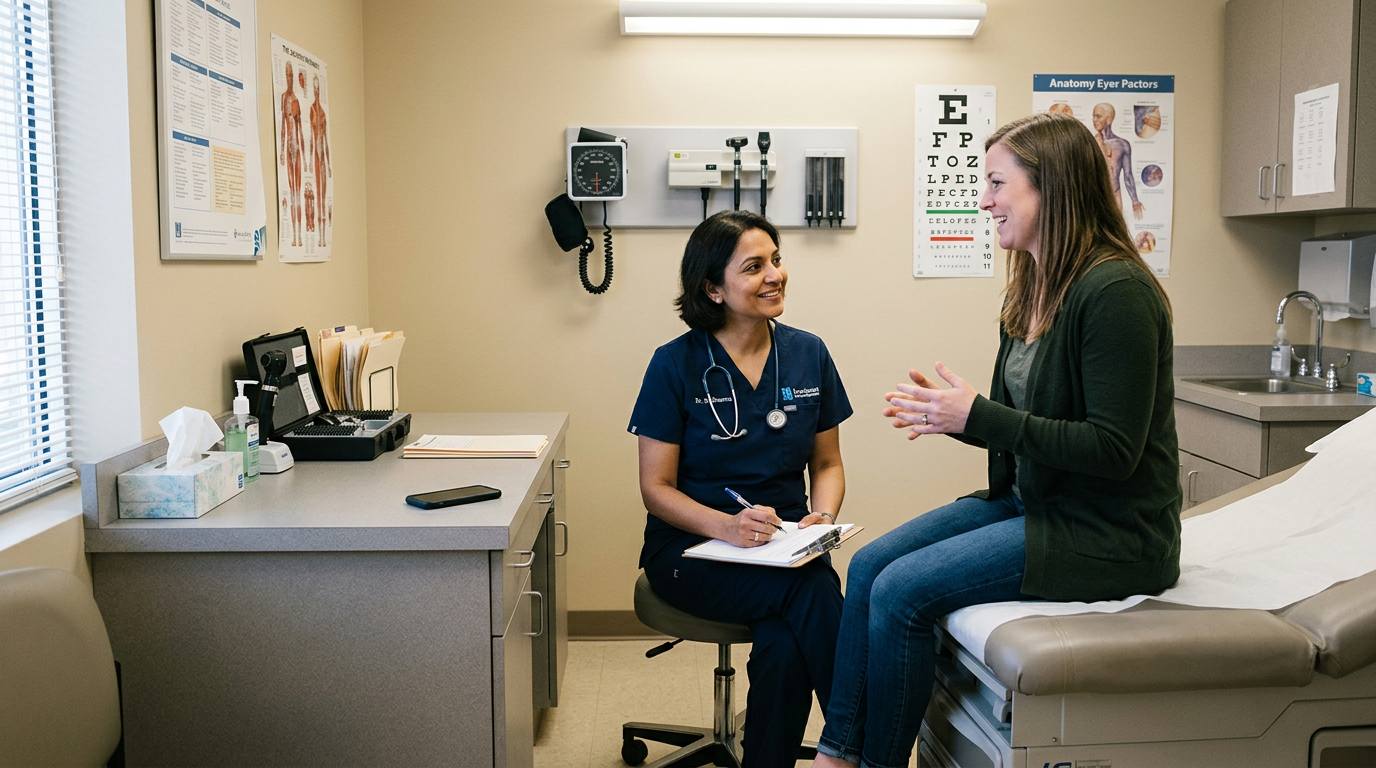
For psychiatrists, clinical work has always demanded something deeper than routine assessment. It requires presence, attention to nuance, and the ability to truly listen, not just to what is said, but to how it is said, what is avoided, and what is felt in between.
Unlike many other specialties, psychiatry is not procedural. It is conversational, interpretive, and longitudinal. And because of that, documentation is not just a formality, it is a critical extension of the clinical encounter.
However, that same depth creates one of the most significant burdens in psychiatric practice today.
Psychiatrists do not simply document symptoms. They document narratives, direct patient quotes, subtle behavioral observations, evolving thought patterns, and detailed mental state examinations. These are not notes that can be written quickly between patients. They are complex, layered, and time-consuming.
As a result, many psychiatrists find themselves in a familiar cycle, where they spend the consultation fully engaged with the patient, but are then left with a backlog of documentation that must be completed after hours, often from memory, which increases cognitive load and the risk of missing critical details.

The Hidden Burden of Psychiatric Documentation
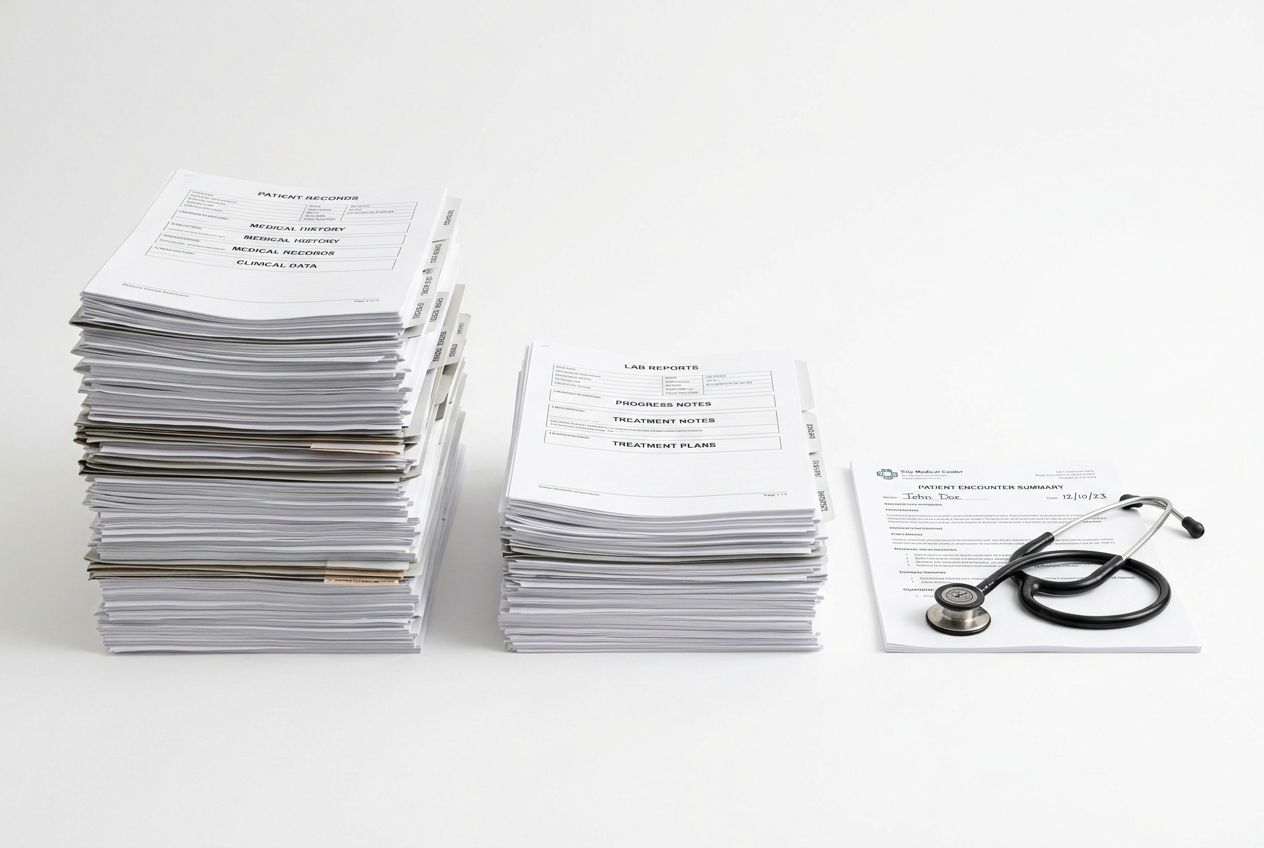
The documentation burden in psychiatry is both quantitative and qualitative. It is not only the volume of notes but the depth required in each encounter.
Studies have shown that physicians can spend nearly two hours on documentation for every hour of patient care, with psychiatry often exceeding this due to the narrative nature of encounters¹. Additionally, a survey published by the American Psychiatric Association found that over 60% of psychiatrists report documentation as a major contributor to burnout, particularly due to the need for detailed narrative recording and medico-legal precision².
Unlike checkbox-based specialties, psychiatric documentation frequently includes direct patient quotations, detailed mental state examinations, risk assessments such as suicidality or harm to others, longitudinal behavioral observations, and complex psychosocial context, all of which are difficult to reconstruct after the encounter. This creates a constant tension between being fully present with the patient and ensuring accurate, comprehensive documentation.
AI Medical Scribes: A Turning Point for Psychiatry
The emergence of AI medical scribes represents a fundamental shift in how psychiatric documentation can be approached.
Tools like Dorascribe are increasingly being used to support clinicians by operating passively in the background during consultations, capturing the clinical conversation in real time and generating structured draft notes that reflect the depth and nuance of psychiatric care.
This changes the dynamic of the consultation in a meaningful way.
Instead of dividing attention between the patient and the screen, psychiatrists can remain fully present, knowing that the core elements of the encounter are being captured accurately and organized into a usable clinical draft.
A multi-center evaluation published in JAMA Network Open reported that AI-assisted documentation reduced clinician documentation time by 30 to 50 percent while also improving note completeness and accuracy³, which is particularly significant in psychiatry where nuance matters.

Preserving Clinical Control While Reducing Workload
One of the initial concerns among psychiatrists is the potential loss of control over clinical documentation, but in practice, the opposite appears to be true.
AI-generated notes, including those produced through tools like Dorascribe, are not final outputs but structured drafts, and the psychiatrist remains fully responsible for reviewing, editing, and validating the content, which ensures that clinical judgment is preserved at every step.
What changes is efficiency.
Psychiatrists can review a structured draft instead of writing from scratch, refine mental state examinations more easily, accurately include patient quotations without relying on memory, and maintain consistency across follow-up notes. This reduces cognitive burden and allows clinicians to focus on interpretation rather than transcription.
Impact on Patient Care and Access
Reducing documentation time has a direct impact on patient care.
When psychiatrists spend less time charting, they can see more patients without extending work hours, reduce delays in follow-up appointments, improve continuity of care, and maintain higher levels of attentiveness during consultations.
A report from the American Medical Association highlighted that improved workflow efficiency through digital tools can increase patient access by up to 15 to 20 percent in high-demand specialties, including mental health services⁴.

Burnout, Emotional Load, and Work-Life Balance
Psychiatry carries a unique emotional burden, as clinicians routinely engage with patients experiencing trauma, depression, psychosis, and complex psychosocial stressors.
When this emotional load is combined with extensive after-hours documentation, it creates a compounding effect on burnout.
AI scribes help address this by reducing the administrative burden that follows emotionally demanding encounters.
In practical use, clinicians often report that tools like Dorascribe reduce the need for after-hours charting, allowing documentation to be largely completed within or shortly after the clinical encounter.
A 2024 study in The Lancet Digital Health noted that clinicians using AI-assisted documentation tools reported significant reductions in after-hours charting and improved work-life balance⁵, allowing for more sustainable clinical practice.
Real-World Experience: What Psychiatrists Are Reporting
In real-world settings, psychiatrists using AI scribes frequently report that they can focus more on their patients without worrying about missing details, that their notes are more complete especially for mental state examinations, and that they are no longer spending hours finishing charts at night.
These changes reflect a meaningful shift in how psychiatric care is delivered, particularly in environments where detailed documentation and emotional engagement are both essential.

The Future of Psychiatric Practice
The integration of AI into psychiatry does not change the essence of the specialty, which remains centered on understanding people, interpreting human behavior, and building therapeutic relationships.
What AI changes is the friction surrounding that work.
By reducing documentation burden while preserving clinical control, AI medical scribes such as Dorascribe allow psychiatrists to practice in a way that is more aligned with the core values of the specialty.
Final Thought
When documentation no longer competes with attention, psychiatrists can remain fully present during consultations while reducing the cognitive and administrative burden that follows emotionally demanding work. With improved efficiency, strong data privacy, and more sustainable workflows, clinicians are better able to focus on meaningful patient interactions while maintaining balance and delivering high-quality care.
References
1. Sinsky C, et al. Allocation of physician time in ambulatory practice. Ann Intern Med. 2016;165(11):753–760.
2. American Psychiatric Association. Physician burnout and administrative burden in psychiatry. Washington, DC; 2022.
3. Rotenstein LS, et al. Evaluation of AI-assisted clinical documentation. JAMA Netw Open. 2023;6(5):e2312345.
4. American Medical Association. Digital health implementation and efficiency report. Chicago: AMA; 2023.
5. Topol E. The impact of AI on clinician workload and well-being. Lancet Digit Health. 2024;6(1):e10–e18.
6. Shanafelt TD, et al. Changes in burnout and satisfaction with work-life integration. Mayo Clin Proc. 2019;94(9):1681–1694.
Disclaimer
This article is for informational purposes only and does not constitute medical advice. Clinicians should apply their clinical judgment and follow local regulations and institutional policies when using any clinical tools.