Quick answer
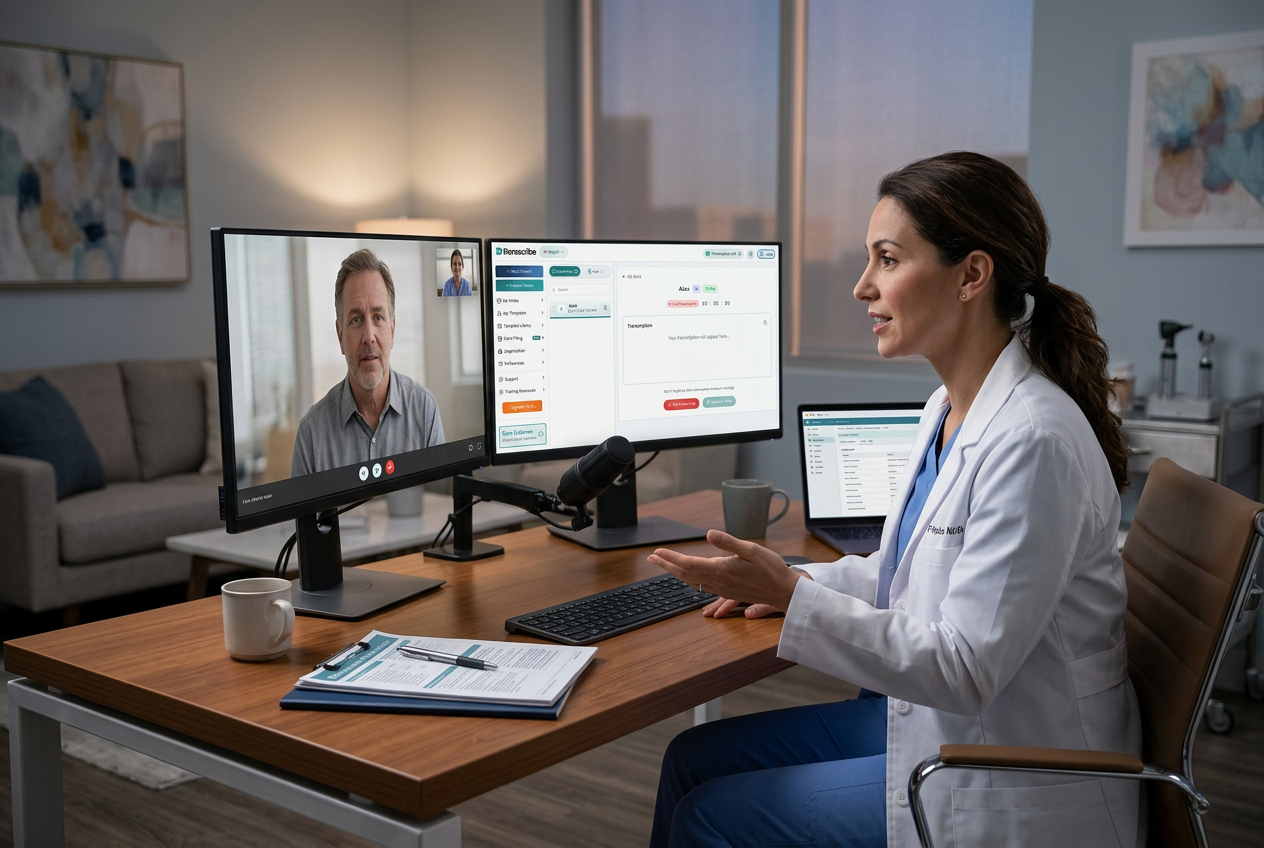
An AI scribe for remote patient care drafts a structured note during or immediately after a virtual encounter so you can review details while they’re fresh. The safest workflow is consistent across settings:
Draft → clinician review → targeted edits → sign → export.
Remote care benefits the most when the tool also helps with the “administrative tail” after the visit: follow‑up instructions, referral letters, work/school notes, insurance documentation, and medication‑related letters (all as drafts for clinician review/signature).
Why remote-care documentation fails more often
Remote care adds friction that many generic “telehealth tips” miss:
- Weaker context cues: audio lag, camera off, interruptions, and home environments.
- More speakers: caregiver, interpreter, family member—easy to misattribute who said what.
- More channels: portal messages and asynchronous follow‑ups often become part of the clinical story.
- More “paperwork moments”: post‑visit letters, instructions, and care coordination tasks that expand after-hours charting.
A scribe helps when it reduces these micro-tasks without producing generic template language.
What a good AI scribe should produce in telehealth
In 2026, “transcription” isn’t the goal. Clinicians need a draft clinical note that is:
- structured (SOAP or problem‑based)
- chronologically coherent
- explicit about plan and follow‑up
- easy to verify (meds, allergies, key negatives)
If you want the practical definition of real-time drafting: Real-time AI medical scribing. For virtual workflows specifically: AI medical scribes for telehealth.
Where AI scribes create the most value in remote patient care
1) Same-day chart closure
The main win is reducing “rebuild from memory.” A draft created close to the encounter shortens time-to-final-note.
2) Cleaner follow‑ups and instructions
Remote visits often end with multiple next steps. A scribe who drafts clear instructions (and the clinician edits) reduces missed follow‑ups.
3) Better continuity across episodes of care
Remote care is often longitudinal (chronic disease, behavioral health, post‑op checks). Consistent note structure makes the next visit safer and faster.
4) Multilingual clinics (when it’s real in your workflow)
In multilingual practices, the problem isn’t only translation—it’s preserving clinical intent and keeping structure consistent. See: Multilingual medical transcription AI in 2026.
Remote-care challenges
Most common issues
- Speaker attribution errors (patient vs caregiver vs interpreter)
- Medication details “almost right” (high-risk error type)
- Generic risk language that doesn’t match the encounter
- Sensitive detail overcapture that doesn’t belong in the progress note
Controls that work
- a 60–90 second sign‑off checklist (meds, key negatives, plan, follow‑up)
- visit-type templates (new vs follow-up vs chronic care)
- obvious “draft vs final” separation
- clear retention/access expectations aligned with your setting
Privacy basics: Ensuring patient privacy.
What to evaluate before choosing an AI scribe for remote care
Use real encounters (not demos) and score each item.
- Clinician control (draft ≠ final)
- Editing speed (meds, allergies, key negatives, plan)
- Template control (visit types and specialty sections)
- Multi-speaker handling (caregiver/interpreter)
- Telehealth readiness (variable audio quality)
- Clear privacy answers (storage, access, retention, deletion)
If you’re building an evaluation checklist, start here: Top questions doctors ask before switching to an AI medical scribe.
Where DoraScribe fits
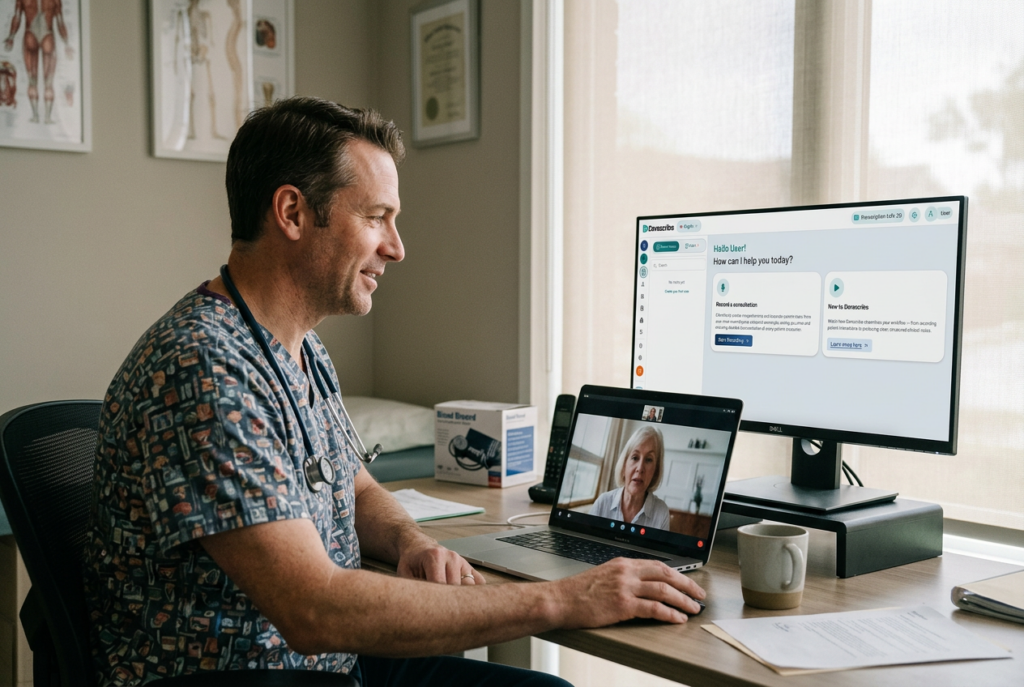
DoraScribe is built for clinician-controlled documentation: draft → edit → sign.
DoraScribe details that matter in remote care (and are often missing from generic write-ups):
- Custom note templates by visit type and specialty (reduces generic filler text).
- Multilingual workflows for clinics serving multilingual communities.
- Draft clinical letters from encounter context (referrals, work/school, insurance, and medication‑related letters) for clinician review/signature.
- Voice-first workflow support for efficient drafting and editing: Integrated voice recognition.
Learn more: DoraScribe AI medical scribe.
Regional privacy and policy considerations
Requirements vary (for example: HIPAA in the U.S., PHIPA/PIPEDA in Canada, GDPR in EU/UK). In practice, your remote-care tooling should pass the same basic test:
- Where is data stored?
- Who can access it (role-based access)?
- What are the retention and deletion options?
- How does patient notice/consent work in your setting?
Use your clinic policy and local legal guidance as the deciding authority.
FAQ
Does an AI scribe replace clinician judgment? No. It drafts documentation; clinicians review and sign.
Is a telehealth AI scribe safe? It can be, if the output stays a draft and clinicians verify high‑risk elements (meds, key negatives, plan, risk language).
Does “real time” mean everything is stored? No. “Real time” refers to when the draft is generated. Storage/retention is a separate policy decision.
Evidence & sources (selected)
- EHR documentation burden (time-motion study): Annals of Internal Medicine (2016)
- Ambient/AI scribes and documentation burden outcomes: JAMA Network Open (2025)
Next step: If you want to test this in your remote workflow, pilot one visit type for two weeks and measure editing time + time-to-close note. If you need a walkthrough, Contact DoraScribe.