
Die KI-gestützte medizinische Transkription ist mittlerweile Standard in Kliniken, die eine schnellere Dokumentation, weniger Dokumentation außerhalb der Sprechzeiten und sauberere Aufzeichnungen wünschen.
Doch bevor wir uns mit Funktionslisten oder Preisen befassen, stellt sich eine Frage:
Frage: Ist KI-Transkription sicher?
Antworten: Das kann es sein – wenn das Tool für das Gesundheitswesen konzipiert ist und Ihre Klinik es mit den richtigen Datenschutz-, Sicherheits- und Workflow-Kontrollen implementiert.
Haftungsausschluss
Dieser Artikel ist Nur zu allgemeinen Informationszwecken und tut kein Frontalunterricht. Diese Informationen stellen keine Rechts-, Compliance- oder medizinische Beratung dar. Datenschutz- und Sicherheitsbestimmungen variieren je nach Rechtsordnung (z. B. HIPAA in den USA, PHIPA in Ontario, DSGVO in der EU) und Ihrer Rolle (Klinik, Leistungserbringer, Anbieter). Konsultieren Sie stets den Datenschutzbeauftragten, die Rechtsabteilung oder den Compliance-Berater Ihrer Organisation, bevor Sie einen KI-gestützten Workflow für die medizinische Transkription einführen.
Kurzantwort (was die meisten Kliniker wissen wollen)
KI-Transkription ist typischerweise sicher genug für den klinischen Einsatz wann alle Folgendes trifft zu:
- Der Anbieter ist auf Arbeitsabläufe im Gesundheitswesen und den Umgang mit sensiblen Daten spezialisiert (keine generische Transkriptions-App für Endverbraucher).
- Ihre Daten sind geschützt starke Zugriffskontrollen (MFA / rollenbasierte Zugriffskontrolle), Verschlüsselung und Überwachungsprotokollierung.
- Sie haben klare Regeln für Wer hat Zugriff auf die Transkripte?, wie lange sie aufbewahrt werden und wie sie gelöscht werden.
- Die Transkription wird behandelt als EntwurfsdokumentationDer Arzt prüft und finalisiert den Bericht.
- Ihre Vorgehensweise bestätigt, dass die Verträge und Richtlinien der Lieferanten Ihren rechtlichen und internen Anforderungen entsprechen.
Fehlen diese Kontrollmechanismen, kann die KI-Transkription fehlerhaft sein. hohes Risikoinsbesondere wenn sensible Details in Audioaufnahmen, Transkripten und generierten Notizen erfasst werden.
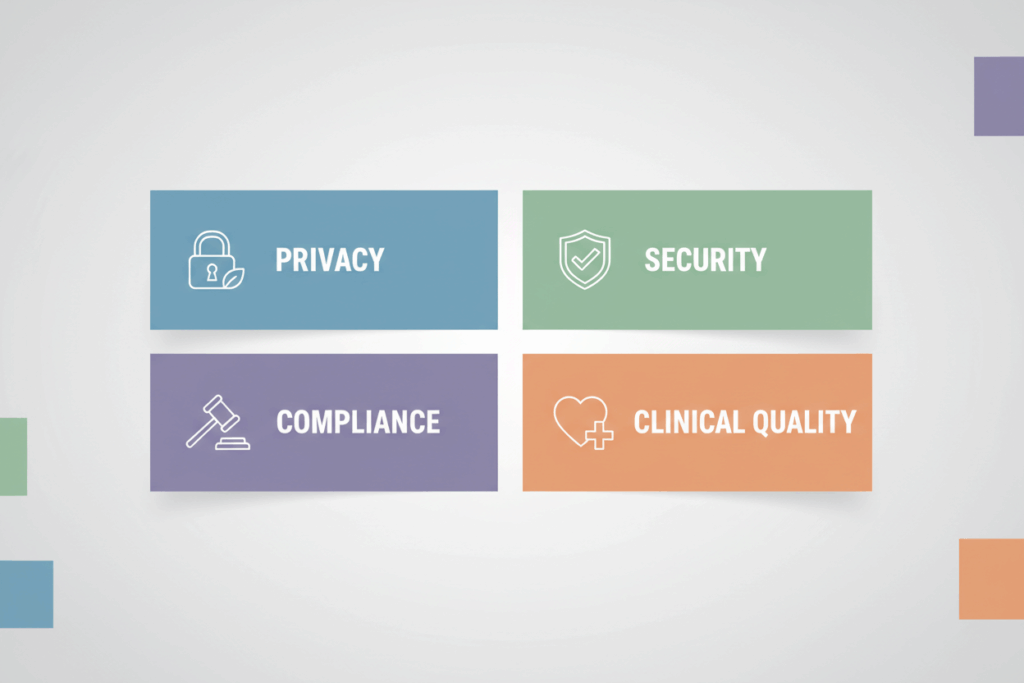
Was „sicher“ in der medizinischen KI-Transkription tatsächlich bedeutet
Wenn Ärzte fragen, ob KI-gestützte medizinische Transkription sicher ist, geht es ihnen in der Regel um drei Dinge:
- Datenschutz — Werden Patientendaten vertraulich behandelt und angemessen weitergegeben?
- Sicherheit — Können Unbefugte auf Audioaufnahmen/Transkripte/Notizen zugreifen?
- Compliance-Bereitschaft — Stimmt der Arbeitsablauf mit den Regeln überein, für die Sie verantwortlich sind?
Ein viertes Element ist in der Medizin von Bedeutung:
- Klinische Sicherheit — Ist das Ergebnis genau genug, um die Dokumentation zu unterstützen, ohne schädliche Fehler einzuführen?
Ein leistungsfähiges KI-Transkriptionssystem berücksichtigt alle vier Aspekte.
Die wahren Risiken (und wo Kliniken Verluste erleiden)
Die meisten „KI-Transkriptions-Horrorgeschichten“ haben nichts damit zu tun, dass KI an sich unsicher ist. Sie passieren vielmehr, wenn der Arbeitsablauf nicht den Standards des Gesundheitswesens entspricht.
Häufige Fehlerquellen:
- Nutzung von Verbraucherwerkzeugen die nicht für den Schutz von Gesundheitsdaten konzipiert wurden.
- Schwache Kontosicherheit (gemeinsame Logins, keine MFA, übermäßig permissiver Zugriff).
- Unklare Datenverarbeitung (Wie lange werden Audiodaten gespeichert? Werden sie für Trainingszwecke verwendet? Wer sind die Subprozessoren?).
- Keine Aufbewahrungs-/Löschregelnwas zu unnötiger Offenlegung führt.
- Mangelhafte Gerätehygiene (Aufnahmen werden unverschlüsselt auf persönlichen Geräten, nicht verwalteten Laptops gespeichert).
- Keine patientenorientierte Transparenzinsbesondere wenn lokale Normen oder Richtlinien eine vorherige Benachrichtigung/Zustimmung erfordern.
Die gute Nachricht: Die meisten dieser Probleme lassen sich mit einer übersichtlichen Checkliste vermeiden.
Die 7 Säulen einer sichereren KI-gestützten medizinischen Transkription
1) Datenminimierung und Zweckbindung
Transkribieren Sie nur das, was Sie für die Dokumentation benötigen.
Beispiele aus der Praxis:
- Vermeiden Sie es, unnötige Smalltalk-Gespräche oder nicht-klinische Themen aufzuzeichnen.
- Verwenden Sie Vorlagen, die dazu ermutigen klinisch relevante Struktur (SOAP(siehe Notiz, Überweisung).
- Bevorzugen Sie Systeme, die eine klare Trennung unterstützen zwischen Rohtranskript und Schlussbemerkung.
2) Verschlüsselung während der Übertragung und im Ruhezustand
Bei der Transkription von Gesundheitsdaten sollte die Verschlüsselung nicht optional sein.
Was Sie sehen möchten:
- Verschlüsselte Verbindungen für die Datenübertragung zwischen Gerät und Server (während der Übertragung).
- Verschlüsselter Speicher für Audio/Transkripte/Notizen (im Ruhezustand).
3) Strenge Identitäts- und Zugriffskontrollen
Die meisten Sicherheitslücken sind Zugriffsprobleme, keine „KI-Probleme“.
Basiskontrollen:
- Multi-Faktor-Authentifizierung (MFA) für jedes Konto.
- Rollenbasierte Zugriffskontrolle (RBAC) Das Personal sieht also nur das, was es braucht.
- Sitzungstimeouts, Anmeldewarnungen und unkomplizierte Kontoabmeldung.

4) Audit-Protokolle und Überwachung
Ein für den Einsatz im Gesundheitswesen geeignetes System sollte einen Prüfpfad bieten.
Mindestens:
- Wer hat auf einen Datensatz zugegriffen?
- Wann sie darauf zugegriffen haben
- Welche Aktionen wurden durchgeführt (angesehen, exportiert, gelöscht)?
Die Prüfbarkeit unterstützt die Verantwortlichkeit und die Reaktion auf Vorfälle.
5) Klare Aufbewahrungs- und Löschrichtlinien
Die Speicherung von Daten „für immer“ erhöht das Risiko, ohne die Versorgung zu verbessern.
Beste Übung:
- Aufbewahrung definieren für Audio-, Rohtranskripte und Schlussbemerkungen separat.
- Lösch-/Exportvorgänge explizit gestalten.
- Stellen Sie sicher, dass die Aufbewahrungsfristen mit den Richtlinien Ihrer Klinik und den geltenden Bestimmungen übereinstimmen.
6) Lieferantenrisikomanagement (Verträge und Unterauftragnehmer)
Hier scheitern viele Implementierungen.
Bevor Sie KI-gestützte medizinische Transkription einführen, sollten Sie Folgendes bestätigen:
- Wo die Daten verarbeitet/gespeichert werden (und ob dies Ihren Anforderungen entspricht).
- Ob und unter welchen Kontrollen Daten an Unterauftragnehmer weitergegeben werden.
- Welche Vertragsbedingungen gelten (Datenschutzzusatz, Datenverarbeitungsvereinbarung, gegebenenfalls Geschäftspartnervereinbarungen)?
7) Klinische Qualitätskontrollen (eine Überprüfung durch einen Menschen ist obligatorisch)
Die KI-Transkription sollte wie ein schneller Entwurf behandelt werden – nicht wie das endgültige Diagramm.
Operativ:
- Der Arzt überprüft die Notiz auf Richtigkeit, Auslassungen und falsch verstandene Begriffe.
- Um Mehrdeutigkeiten zu vermeiden, verwenden Sie strukturierte Vorgaben/Vorlagen.
- Dokumentieren Sie einen schnellen „Abnahme“-Prozess, damit nichts ungeprüft abgelegt wird.

Eine Checkliste für den Klinikalltag: So bewerten Sie ein KI-gestütztes medizinisches Transkriptionstool
Nutzen Sie die folgenden Fragen, um jeden Anbieter (einschließlich Dorascribe) zu bewerten:
- Unterstützt das Tool explizit Arbeitsabläufe in der Gesundheitsdokumentation? (strukturierte Notizen, Vorlagenausgaben, Überprüfung durch Kliniker)?
- Was ist die Standardaufbewahrungsdauer? für Audio und Transkripte – und kann man das ändern?
- Werden die Daten zum Trainieren von Modellen verwendet?Falls ja, können Sie sich abmelden?
- Welche Sicherheitskontrollen sind Standard? (MFA, RBAC, Verschlüsselung, Audit-Logs)?
- Kann der Zugriff rollenbasiert gesteuert werden? (Arzt, Krankenschwester, Verwaltungsangestellter, Student)?
- Was passiert, wenn Mitarbeiter das Unternehmen verlassen?—Können Sie den Zugriff sofort widerrufen?
- Wie werden Daten exportiert? (Kopieren/Einfügen, PDF, Integration) und welche Sicherheitsvorkehrungen gibt es beim Export?
- Wo werden die Daten verarbeitet/gespeichert? Und wer sind die Subprozessoren?
- Welche Verpflichtungen zur Reaktion auf Vorfälle bestehen? (Fristen für die Benachrichtigung bei Datenschutzverletzungen, Unterstützung)?
- Wie sieht der Workflow auf dem Handy aus? (Gerätesicherheit, Browser vs. App, Sitzungssteuerung)?
Kann ein Anbieter diese Fragen nicht klar beantworten, ist das als Risikosignal zu werten.
Wie Dorascribe mit Datenschutz und Sicherheit umgeht
Dorascribe wurde für klinische Dokumentationsabläufe entwickelt, bei denen Datenschutz und Sicherheit keine „nice-to-haves“, sondern betriebliche Anforderungen sind.
Einen detaillierteren Überblick über die Datenschutz- und Sicherheitskonzepte, die beim automatisierten Schreiben relevant sind, finden Sie im Leitfaden von Dorascribe. Gewährleistung des Patientenschutzes und der Datensicherheit in der medizinischen Dokumentation.
Wenn Sie einen leicht verständlichen Überblick über Schutzmaßnahmen und darüber, was „angemessener Schutz“ im kanadischen Datenschutzkontext bedeutet, wünschen, lesen Sie bitte Folgendes: Leitlinien des Büros des Datenschutzbeauftragten von Kanada zum Schutz personenbezogener Daten.
Häufig gestellte Fragen: „Ist KI-Transkription sicher?“ – aus der Praxis
Ist die medizinische Transkription mittels KI sicher für Patientenbesuche?
It kann seinWenn Sie ein für das Gesundheitswesen geeignetes Tool verwenden und die oben genannten Kontrollmechanismen (Zugriffskontrolle, Verschlüsselung, Audit-Logs, Aufbewahrungsregeln und Überprüfung durch medizinisches Fachpersonal) anwenden, besteht das Risiko in der Regel in einer mangelhaften Implementierung – nicht im Konzept der KI-Transkription an sich.
Ist die KI-Transkription automatisch HIPAA-/PHIPA-/DSGVO-konform?
Kein Tool ist in jedem Kontext „automatisch konform“. Konformität hängt ab von wie Das Tool wird verwendet, Ihre Rolle und Pflichten sowie die vertraglichen und technischen Sicherheitsvorkehrungen des Anbieters. Behandeln Sie die Einhaltung der Vorschriften als eine Arbeitsablauf + Anbieter + Richtlinie Frage.
Kann ich eine generische Spracherkennungs-App verwenden, um klinische Gespräche zu transkribieren?
Das ist im Allgemeinen so. nicht empfohlen Für geschützte Gesundheitsdaten gilt dies nur, wenn Sie eindeutig bestätigen können, dass diese den Datenschutz- und Sicherheitsanforderungen Ihrer Organisation sowie den geltenden Bestimmungen Ihres Zuständigkeitsbereichs entsprechen. Für die Transkription im Gesundheitswesen sollten Tools verwendet werden, die speziell für die Verarbeitung klinischer Daten entwickelt wurden.
Ersetzt die KI-Transkription die Dokumentationsverantwortung des Arztes?
Nein. Die Verantwortung für die Richtigkeit und Vollständigkeit der Patientenakte liegt weiterhin bei den behandelnden Ärzten. Die KI-Transkription dient am besten als Beschleunigungsmechanismus, der den Tippaufwand reduziert, während der Arzt die Dokumentation weiterhin prüft und finalisiert.
Wie lässt sich dies am sichersten in einer kleinen Praxis einführen?
Beginnen Sie schmal:
- Pilotprojekt mit einer kleinen Anzahl von Nutzern
- Strenge Rollen und MFA verwenden
- Konservative Aufbewahrungsregeln festlegen
- Erstellen Sie eine einfache Checkliste für die Abnahme
- Dokumentieren Sie die Erwartungen an die patientenorientierte Kommunikation.
Erweitern Sie den Workflow, sobald er stabil ist.
Endeffekt
Damit Ist KI-Transkription sicher?
Ja, wenn Sie ein für das Gesundheitswesen geeignetes KI-gestütztes medizinisches Transkriptionstool auswählen und es mit Datenschutz-, Sicherheits- und Überprüfungsmechanismen implementieren, die der Sensibilität klinischer Daten entsprechen.
Wenn Sie KI-Transkription in einem klinisch orientierten Arbeitsablauf einsetzen möchten, ist Dorascribe die richtige Wahl. Es wurde entwickelt, um Teams dabei zu helfen, schneller zu dokumentieren und gleichzeitig Datenschutz- und Sicherheitsaspekte in den Vordergrund zu stellen.