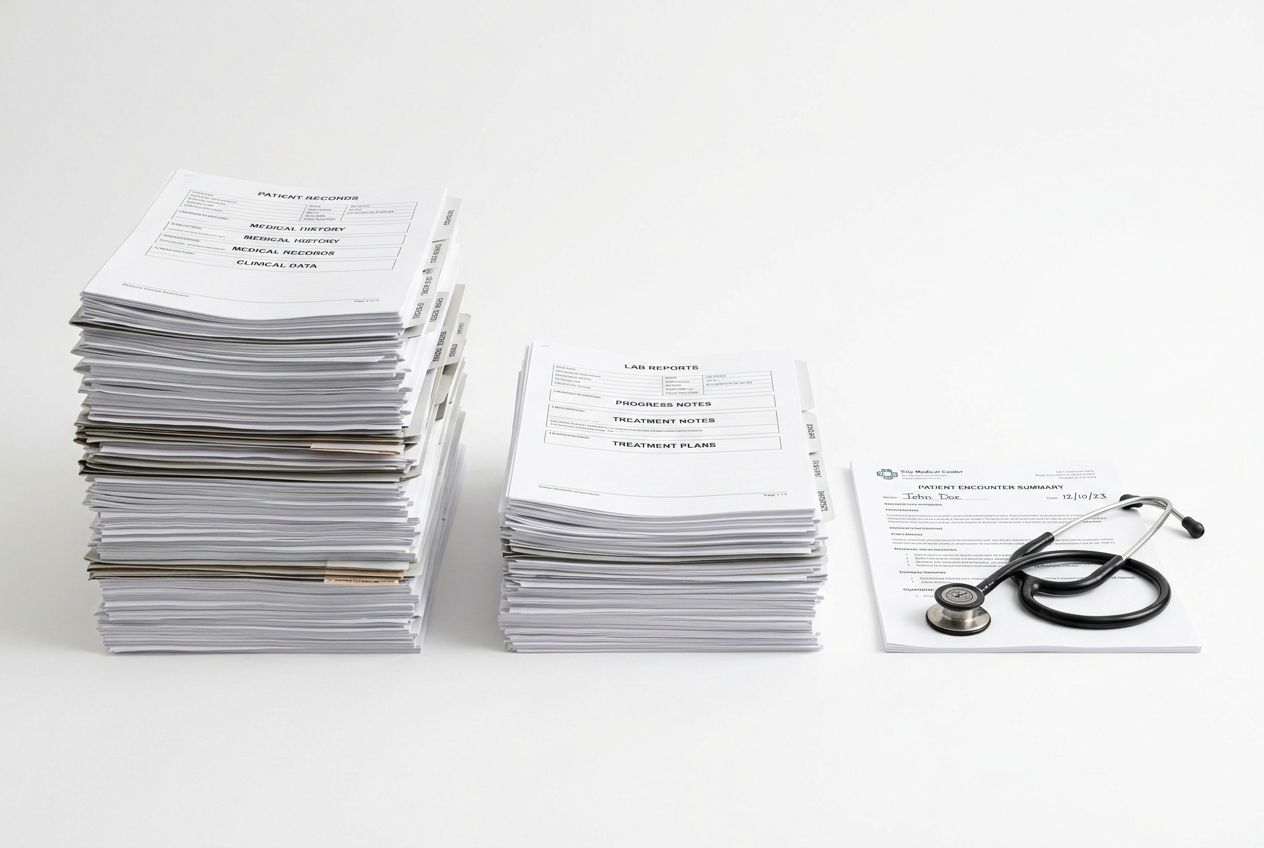
La documentation médicale est le fondement des soins de santé
Elle garantit la précision et la continuité des soins aux patients. Cependant, face à l'augmentation de la charge de travail et à l'évolution constante des technologies, les professionnels de santé se demandent : La transcription par IA est-elle une meilleure alternative à la transcription médicale traditionnelle ?
Pour vous aider à faire un choix éclairé, nous examinons dans ce blog certaines des distinctions, des avantages et des difficultés des deux approches.
Qu'est-ce que la transcription médicale ?
La transcription médicale est depuis longtemps la référence absolue pour transformer les enregistrements audio des médecins en documents écrits. Elle fait appel à des transcripteurs humains hautement qualifiés qui écoutent les dictées et tapent des rapports détaillés.
Comment ça fonctionne
Ce processus est simple mais prend du temps :
- Les médecins enregistrent leurs notes.
- Les transcripteurs transcrivent manuellement l'audio.
- Le document fait l’objet de plusieurs vérifications pour en vérifier l’exactitude.
Les défis:
- Prend du temps : la nature manuelle du processus entraîne des retards dans les délais d'exécution.
- Erreur humaine : même les transcripteurs qualifiés peuvent mal interpréter l’audio en raison de dictées ou d’accents peu clairs.
- Coûteux : embaucher des professionnels expérimentés ou sous-traiter le service peut être coûteux.
Qu'est-ce que l'écriture IA ?
L'IA de transcription représente un bond en avant technologique, utilisant l'intelligence artificielle pour transcrire des dictées médicales en temps réel. Elle s'intègre aux systèmes de dossiers médicaux électroniques (DME), simplifiant ainsi la documentation.
Comment ça marche.
Les outils d'écriture assistée par ordinateur utilisent des algorithmes de reconnaissance vocale pour convertir les mots prononcés en texte. Les systèmes avancés sont formés pour comprendre la terminologie médicale, s'adapter à divers accents et même identifier les nuances contextuelles.
Les avantages.
- Rapidité et efficacité : l’IA peut transcrire en quelques secondes, réduisant ainsi considérablement le temps de documentation.
- Rentable : une fois mis en œuvre, il élimine le besoin d’externaliser ou d’embaucher du personnel de transcription.
- Intégration en temps réel : de nombreux outils se synchronisent automatiquement avec les DSE, gardant les dossiers à jour sans intervention manuelle.
Comparaison entre la transcription assistée par ordinateur et la transcription médicale traditionnelle
Précision et fiabilité.
- Transcription traditionnelle : Bien que des professionnels qualifiés garantissent un degré élevé de précision, l’erreur humaine reste un facteur.
- Écriture d'IA : Des algorithmes avancés minimisent ces erreurs humaines.
Efficacité et délai d'exécution.
- Transcription traditionnelle : des retards surviennent en raison de processus manuels.
- Écriture d'IA : La transcription instantanée en fait un gagnant évident en termes de rapidité.
Comparaison des coûts.
- Transcription traditionnelle : Coûts récurrents de personnel ou d'externalisation.
- Écriture d'IA : Un investissement unique avec des dépenses courantes minimales, offrant des économies à long terme.
Adaptabilité et évolutivité.
- Transcription traditionnelle : limitée par la disponibilité et la capacité des transcripteurs.
- Écriture d'IA : S'adapte facilement pour gérer des charges de travail accrues ou des utilisateurs supplémentaires.
Défis et considérations lors du choix
Confidentialité et sécurité des données.
La conformité à la loi HIPAA n'est pas négociable dans la documentation médicale. Alors que la transcription traditionnelle repose sur des transferts de fichiers sécurisés, la transcription par IA exige des mesures de cybersécurité robustes pour protéger les données des patients contre les violations.
Courbe d'apprentissage et formation.
Les systèmes d’IA nécessitent une configuration et une formation initiales pour s’adapter à des terminologies médicales spécifiques. À l’inverse, la transcription traditionnelle s’appuie sur des professionnels préformés mais manque d’adaptabilité.
Aptitude aux spécialités
Les différentes spécialités ont des besoins différents. Prenons l'exemple de la radiologie.
- Radiologie/Les radiologues préfèrent les descriptions détaillées, que l'IA gère bien avec une personnalisation appropriée.
- La médecine d’urgence, en revanche, exige une transcription en temps réel pour une documentation immédiate.
FAQ : répondre aux préoccupations courantes
L’IA est-elle fiable pour la terminologie médicale complexe ?
Oui, mais cela peut nécessiter une personnalisation et une formation pour gérer des termes hautement spécialisés.
C'est ici qu'intervient le choix d'une entreprise compétente et fiable. logiciel de transcription médicale vient dans maniable.
Quelle est la différence de coût entre la transcription par IA et la transcription traditionnelle ?
L'IA implique généralement des coûts initiaux, tandis que la transcription traditionnelle entraîne des dépenses récurrentes. Au fil du temps, l'IA s'avère plus rentable.
Comment l’IA gère-t-elle les problèmes de confidentialité et de sécurité ?
Un efficace L'outil d'IA intégrera le cryptage et se conformera HIPAA réglementations, garantissant la sécurité des données.
Faire un choix : lequel choisir ?
En fin de compte, la décision dépend de vos besoins spécifiques :
- Choisissez la transcription traditionnelle si vous privilégiez la surveillance humaine et traitez des cas complexes et nuancés.
- Optez pour l’écriture IA si la rapidité, l’évolutivité et la rentabilité sont vos principales priorités.
Pendant que vous y êtes, évaluez la taille, la spécialité et le budget de votre cabinet pour déterminer la solution la mieux adaptée.
Conclusion : l’avenir de la transcription médicale
La transcription par IA et la transcription médicale traditionnelle ont toutes deux leurs mérites. Cependant, les progrès rapides dans ce domaine La technologie AI en font une option de plus en plus attrayante pour les prestataires de soins de santé qui cherchent à améliorer leur efficacité et à réduire leurs coûts.
Agissez dès aujourd'hui ; révolutionnez votre processus de documentation ! Explorez un Solution de traçage IA qui peut transformer votre flux de travail. Partagez cet article ou laissez un commentaire ci-dessous avec vos réflexions et vos expériences.
[/ Et_pb_text] [/ et_pb_column] [/ et_pb_row] [/ et_pb_section]