
Quick Summary
- Multilingual care environments increase documentation complexity and error risk.
- AI medical charting helps standardize notes across languages while preserving clinical intent.
- Accurate charting supports better continuity of care, compliance, and patient trust.
- Dorascribe enables clinicians to document naturally while maintaining structured, clinician-reviewed records.
Why Multilingual Clinics Face Unique Charting Challenges
Healthcare settings are increasingly multilingual. Clinics serving diverse populations often manage visits where patients, clinicians, and staff speak different primary languages. While interpreters and bilingual providers help bridge communication gaps, medical documentation remains a major challenge.
Manual charting in multilingual environments often leads to:
- Inconsistent terminology across visits
- Lost nuance when translating symptoms or histories
- Increased documentation time due to clarification and rework
This is where AI medical charting becomes particularly valuable. Instead of relying on fragmented notes or post-visit reconstruction, modern AI-assisted documentation supports structured, consistent records—even when multiple languages are involved.

How AI Medical Charting Supports Multilingual Documentation
AI medical charting systems are designed to assist clinicians during patient encounters, capturing clinical information as it is discussed and organizing it into structured notes.
In multilingual clinics, this approach helps by:
- Allowing clinicians to speak naturally during visits
- Reducing reliance on manual translation during documentation
- Maintaining consistent chart structure across languages
As Dorascribe explains in its overview of the evolution of medical scribing
AI has moved beyond basic transcription to support clinician-guided documentation workflows that adapt to real-world care settings.
Accuracy Across Languages: More Than Translation
One of the biggest misconceptions is that multilingual charting is just about translation. In reality, clinical accuracy depends on context, structure, and review, not word-for-word conversion.
AI medical charting improves accuracy by:
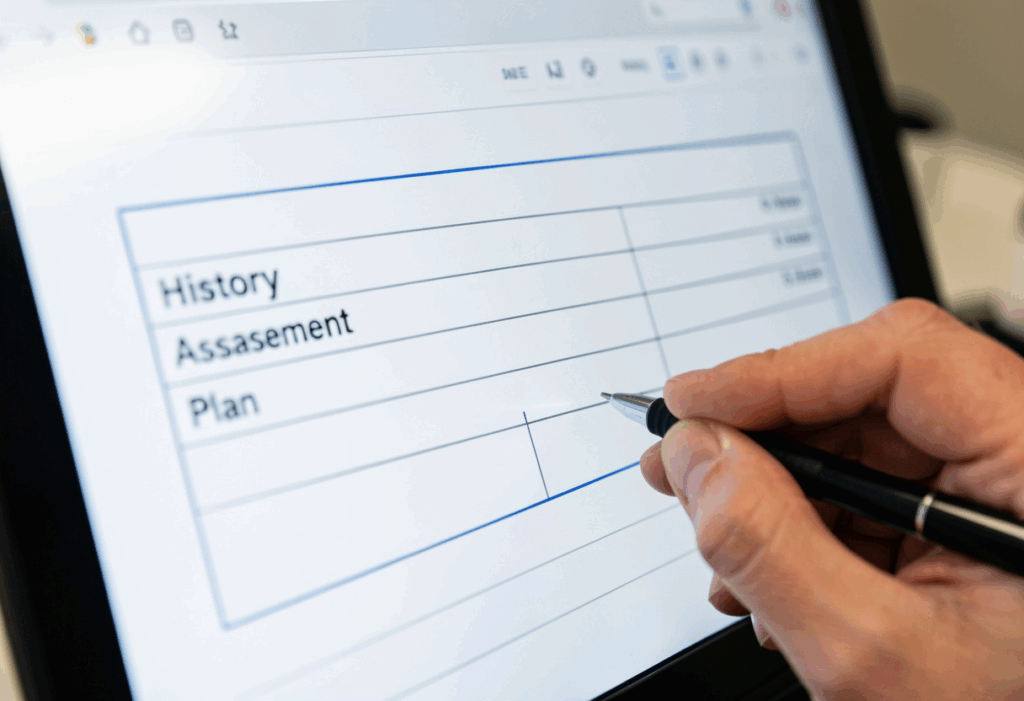
- Organizing notes into standardized sections (assessment, plan, history)
- Preserving clinical meaning rather than literal phrasing
- Supporting clinician review before finalization
This emphasis on accuracy and oversight aligns with Dorascribe’s approach to real-time AI medical scribing, where AI-generated content is always treated as a draft—not a final record.
Reducing Documentation Burden in Diverse Care Teams
Multilingual clinics often rely on teams with varying language proficiencies. Without consistent documentation workflows, this can lead to confusion and duplicated effort.
By supporting structured AI-assisted charting, clinics can:
- Improve note readability across providers
- Reduce follow-up clarification between staff
- Create clearer longitudinal records for ongoing care
This consistency is especially important in high-volume or collaborative environments, a theme Dorascribe explores further in its discussion of AI medical scribes in virtual care, where documentation clarity directly affects care continuity.

Patient Trust and Transparency in Multilingual Settings
Patients receiving care in a second language often have heightened concerns about understanding, privacy, and accuracy. Clear documentation practices help build confidence.
AI medical charting supports patient trust when clinics:
- Explain how documentation tools are used
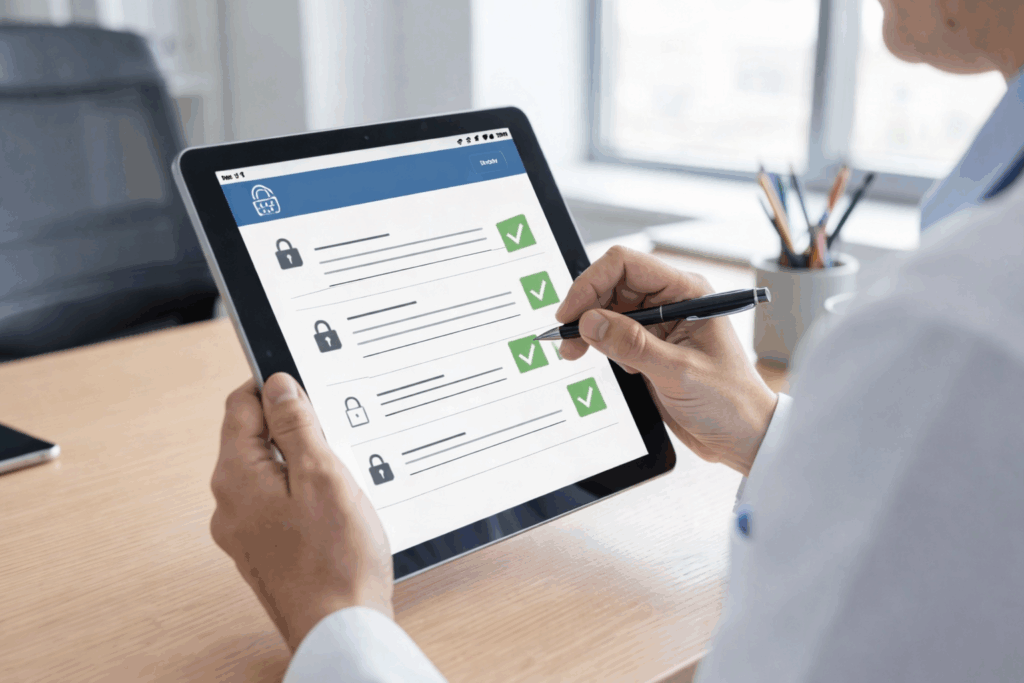
- Ensure clinicians review and approve all notes
- Protect sensitive information across languages
Dorascribe addresses these expectations directly in ensuring patient privacy and data security, outlining safeguards that apply regardless of language or care setting.

Compliance and Quality Across Languages
From a compliance and quality perspective, inconsistent documentation across languages can increase audit risk and create gaps in clinical continuity. AI medical charting helps multilingual clinics standardize how encounters are documented while still allowing clinicians to capture nuance and context.
This balance between structure and flexibility is explored in Dorascribe’s overview of the role of AI medical scribes in healthcare documentation, where consistent note frameworks support regulatory requirements without forcing rigid, one-size-fits-all templates.
When Multilingual AI Medical Charting Makes the Biggest Impact
AI-assisted charting is especially valuable in:
- Community clinics serving diverse populations
- Practices with rotating or international staff
- Telehealth visits involving interpreters
- Follow-up care where multiple providers review the same chart
In each case, structured documentation reduces ambiguity and improves continuity.
FAQs: AI Medical Charting in Multilingual Clinics
Does AI medical charting replace interpreters?
No. AI supports documentation, not patient communication or interpretation.
Is multilingual charting accurate across different languages?
Accuracy depends on clinician review and structured workflows, not automatic translation alone.
Can clinicians edit AI-generated notes?
Yes. AI medical charting systems are designed for clinician review and approval.
Does multilingual charting affect patient privacy?
No, when proper safeguards are in place. Privacy standards apply regardless of language.

Final Thoughts: Better Charting for Diverse Care
As clinics become more linguistically diverse, documentation workflows must evolve. AI medical charting helps multilingual clinics reduce errors, improve consistency, and support better patient outcomes—without adding administrative burden.
If you want to explore how Dorascribe supports accurate, clinician-led documentation:
- Visit the Dorascribe blog for real-world use cases
- Review common questions in the Dorascribe FAQs