Quick Summary
- AI-generated doctors’ notes are transforming how clinicians document patient encounters
- These tools reduce administrative burden while improving accuracy and consistency
- Clinician oversight, privacy safeguards, and workflow fit remain essential
- Dorascribe focuses on real-time, clinician-controlled documentation—not automation without accountability
What are AI-generated doctors’ notes?
AI-generated doctors’ notes refer to clinical documentation created with the support of artificial intelligence during or after patient encounters. Instead of physicians typing or dictating notes manually, AI systems capture conversational context and help draft structured medical notes.
Unlike basic transcription, modern AI documentation tools are designed to understand clinical language, organize information into medical formats (such as SOAP or narrative notes), and support clinician review before anything becomes part of the patient record.
This shift is not about replacing doctors. It’s about removing unnecessary clerical work so clinicians can focus on patient care.
Why Clinicians Are Turning to AI-Generated Doctors’ Notes
Clinical documentation has become one of the biggest contributors to physician burnout. Studies consistently show that doctors spend hours each day charting—often after clinic hours.
AI-generated doctors’ notes help address this by:
- Reducing time spent typing and editing
- Improving note completeness and structure
- Supporting real-time documentation during visits
- Allowing clinicians to stay present with patients
This is why real-time approaches, like those outlined in Dorascribe’s overview of a real-time AI medical scribe, are gaining traction across primary care, specialty clinics, and virtual care settings.

How AI-Generated Doctors’ Notes Are Created
Most AI documentation workflows follow a clinician-centered process:
- The patient encounter takes place (in-person or virtual)
- The AI captures relevant clinical context during the visit
- A draft note is generated based on medical structure and terminology
- The clinician reviews, edits, and approves the note
- Only the finalized note becomes part of the record
This model ensures that AI-generated doctors’ notes remain drafts—not final medical decisions—keeping clinical judgment firmly in human hands.

Accuracy, Oversight, and Clinical Responsibility
One of the most common concerns about AI-generated doctor’s notes is accuracy. While AI has improved significantly, it is not infallible.
That’s why responsible systems are designed around clinician oversight. The AI supports documentation, but the physician remains accountable for:
- Reviewing clinical facts
- Correcting inaccuracies
- Confirming diagnoses and plans
This distinction is critical and is explored further in Dorascribe’s discussion on whether AI transcription is safe for healthcare documentation.
The takeaway is simple: AI should assist—not replace—clinical responsibility.

Time Savings Without Cutting Corners
A major driver of adoption is efficiency. Many practices report meaningful reductions in documentation time when using AI-generated doctors’ notes.
Instead of finishing charts after hours, clinicians can:
- Complete notes during the visit
- Reduce backlog and chart closure delays
- Improve work-life balance
Dorascribe breaks down real-world time savings in its analysis of whether AI scribes actually save time, showing where efficiency gains are realistic and where expectations should remain grounded.

Choosing the Right Fit for Different Practice Types
Not every clinic has the same documentation needs. Small practices, for example, often need tools that are simple to adopt, cost-transparent, and flexible.
AI-generated doctors’ notes can be especially helpful in smaller settings when the technology:
- Doesn’t require complex integrations
- Adapts to existing workflows
- Keeps clinicians in control
These considerations are explored in Dorascribe’s guide to finding the best AI medical scribe for a small practice, which focuses on practical decision-making rather than hype.
Patient Trust and Transparency Matter
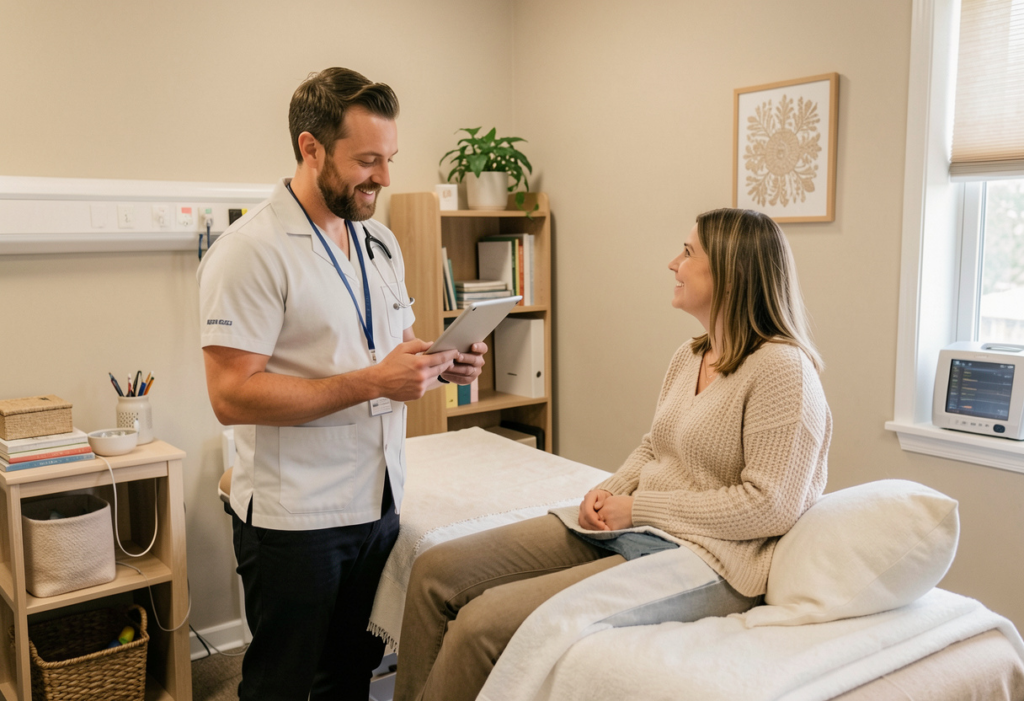
As AI becomes more visible in exam rooms, patients are increasingly asking questions about how their visits are documented.
Clinics using AI-generated doctors’ notes should be prepared to explain:
- What is being captured
- Whether audio or transcripts are stored
- How patient data is protected
- Whether patients can opt out
Dorascribe addresses this from the patient’s perspective in its guide on questions to ask your doctor about AI recording, helping practices foster trust through transparency.
Clear communication reduces anxiety and strengthens the doctor-patient relationship.

Specialty Use Cases: Where AI Notes Add the Most Value
Different specialties experience documentation burden differently. In psychiatry, for example, detailed narrative notes are essential, but excessive typing can disrupt therapeutic rapport.
AI-generated doctors’ notes can support:
- Accurate capture of patient narratives
- Consistent structure across sessions
- Reduced distraction during sensitive conversations
This balance is explored in Dorascribe’s overview of AI scribes in psychiatry, where documentation support must be especially thoughtful and clinician-controlled.

Privacy and Compliance Are Non-Negotiable
Any system generating doctors notes with AI must meet strict privacy and compliance standards. This includes:
- Secure data handling
- Limited access controls
- Clear retention policies
- Compliance with healthcare regulations
AI-generated doctors’ notes should never be used for secondary purposes without explicit safeguards. Dorascribe emphasizes privacy-first design across its platform, reinforcing that efficiency cannot come at the cost of patient trust.
What AI-generated doctors’ Notes Are Not
It’s equally important to clarify what these tools do not do:
- They do not diagnose patients
- They do not make clinical decisions
- They do not replace physician judgment
- They do not finalize notes without review
AI-generated doctors’ notes are best understood as documentation assistants—not autonomous systems.
The Future of AI-generated doctors’ Notes
Looking ahead, AI documentation will continue to evolve, but the core principles will remain:
- Clinician control
- Transparency for patients
- Strong privacy safeguards
- Realistic expectations
The most successful implementations will be those that enhance care without disrupting trust or workflow.
Final Thoughts: Using AI Without Losing the Human Touch
AI-generated doctors’ notes are not about automating medicine—they’re about giving clinicians time back. When used responsibly, they can reduce burnout, improve documentation quality, and support better patient interactions.
If you’re exploring how AI documentation fits into your practice, Dorascribe’s growing library of resources covers everything from real-time workflows to safety, specialty use cases, and patient communication.
Learn how real-time AI medical scribing works in practice
Explore Dorascribe’s full blog for ongoing updates and guidance