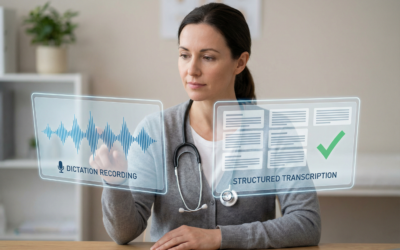
Clinical documentation has long been one of the biggest sources of administrative burden in healthcare. Physicians often spend hours typing notes after patient visits, which reduces time available for direct care. Fortunately, AI medical scribe technology has evolved rapidly. Many modern platforms now deliver integrated voice recognition, allowing conversations between clinicians and patients to be automatically converted into structured clinical notes.
In other words, instead of typing every detail manually, clinicians can rely on AI-powered documentation tools that listen, interpret, and generate medical notes in real time.
However, not all platforms offering AI scribes provide the same capabilities. Some focus only on transcription, while others combine speech recognition with advanced clinical documentation automation.
So which services deliver AI medical scribe solutions with integrated voice recognition, and what should healthcare providers look for when choosing one?
Let’s explore the key features and leading approaches in this fast-growing space.
Why Integrated Voice Recognition Matters in Medical Documentation
Before comparing services, it’s important to understand why integrated voice recognition is becoming a core requirement for modern medical documentation tools.
Traditional dictation systems require clinicians to record notes and later send them for transcription. While this process saves typing time, it still creates delays and additional workflow steps.
In contrast, modern AI medical scribes use voice recognition directly during patient consultations.
As a result, documentation happens automatically while the visit is taking place.
This approach provides several advantages:
1. Real-Time Documentation
AI systems with integrated speech recognition can convert conversations into notes during the appointment. Tools like the real-time AI medical scribe demonstrate how clinical notes can be generated instantly without interrupting the conversation.
Consequently, physicians no longer need to spend hours completing notes after clinic hours.
2. Reduced Physician Burnout
Documentation burden is one of the main contributors to physician burnout. Automating note generation with voice-enabled AI significantly reduces this workload.
In fact, many clinicians report improved work-life balance when using automated documentation tools.
3. Improved Clinical Accuracy
Modern AI systems do more than transcribe speech. They interpret medical conversations and structure the information into standardized formats such as SOAP notes.
For example, platforms capable of generating AI-generated doctors’ notes can organize symptoms, diagnoses, and treatment plans into structured clinical documentation.

Key Services Offering AI Medical Scribes with Integrated Voice Recognition
Several categories of services deliver AI-powered clinical documentation with speech recognition capabilities. However, the level of automation and clinical intelligence varies significantly.
1. Real-Time AI Medical Scribe Platforms
The most advanced solutions are real-time AI medical scribes. These platforms combine speech recognition, natural language processing, and clinical documentation automation.
Instead of simply recording conversations, the system analyzes the dialogue and generates structured notes automatically.
DoraScribe is an example of this approach, where the AI listens to consultations and produces medical notes in seconds.
Moreover, these systems often support multilingual documentation, which is increasingly important in diverse healthcare settings. For instance, multilingual medical transcription AI allows clinicians to document visits accurately across multiple languages.
This capability is especially useful for practices serving international or multilingual patient populations.

2. Voice Dictation Tools for Medical Professionals
Another category includes voice dictation systems that rely heavily on speech recognition.
These tools allow clinicians to speak their notes rather than typing them.
However, unlike AI scribes, dictation systems usually require manual editing and formatting.
To better understand the difference, consider the comparison between dictation vs transcription in healthcare.
Dictation tools focus on converting speech to text, whereas AI scribes interpret conversations and generate structured clinical documentation automatically.
Therefore, while dictation platforms include integrated voice recognition, they often lack the full automation capabilities of AI medical scribes.

3. AI Charting Platforms with Speech Recognition
Some clinical documentation platforms combine voice recognition with AI charting features.
These systems analyze medical conversations and populate electronic health record templates automatically.
For example, clinicians working in multilingual clinics may benefit from tools discussed in AI medical charting for multilingual clinics.
These solutions support documentation in different languages while maintaining structured clinical records.
As healthcare becomes increasingly globalized, integrated voice recognition paired with multilingual capabilities will likely become a standard feature.

Specialty-Specific AI Medical Scribe Solutions
Another important development is the emergence of specialty-specific AI documentation tools.
Different medical fields have unique documentation needs, and some AI platforms are beginning to tailor their solutions accordingly.
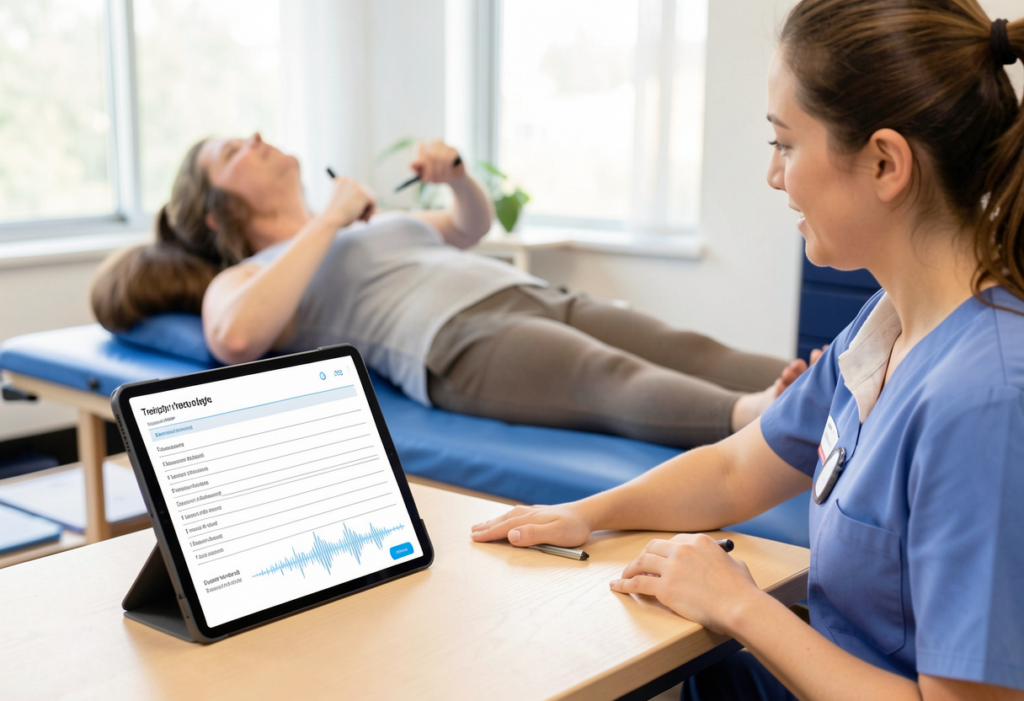
For instance, physiotherapists require documentation focused on treatment plans, progress tracking, and functional assessments.
Platforms highlighted in AI tools for physiotherapists in 2026 demonstrate how integrated voice recognition can adapt to different medical specialties.
Similarly, general practitioners often prefer mobile solutions that integrate documentation tools directly into their workflow. Many clinicians explore these tools through lists like best apps for doctors.
These applications increasingly incorporate voice recognition features that support quick note creation.
Security and Compliance Considerations
While voice recognition brings major efficiency benefits, clinicians must also consider privacy and security.
Medical conversations contain highly sensitive information, which means AI transcription platforms must comply with strict healthcare data protection standards.
Questions to consider include:
• Is patient data encrypted?
• Where is the audio data stored?
• Does the platform comply with healthcare regulations?
Clinicians exploring voice-based documentation tools should review security guidance such as Is AI transcription safe in healthcare?.
Understanding how platforms protect patient data is essential when adopting AI-powered documentation tools.

How Integrated Voice Recognition Improves Healthcare Workflows
The adoption of AI medical scribes is not just about faster documentation. It also plays a critical role in improving overall healthcare workflows.
Manual documentation often creates bottlenecks in clinics.
Physicians spend time entering notes, staff must process records, and delays can impact patient care.
By contrast, integrated voice recognition allows documentation to happen automatically during patient visits.
This significantly reduces administrative friction.
A deeper look at workflow inefficiencies is discussed in healthcare workflow automation gaps, which highlights how automation technologies can save clinics hours of administrative work each week.
When combined with AI-powered medical scribes, voice recognition becomes a central component of workflow automation in healthcare.

What to Look for in an AI Medical Scribe with Voice Recognition
Not every AI documentation platform offers the same capabilities.
Clinicians evaluating these tools should consider several important factors.
1. Real-Time Documentation
The system should generate clinical notes during patient consultations rather than requiring manual editing later.
2. Clinical Context Understanding
Speech recognition alone is not enough. The AI should understand medical terminology and convert conversations into structured notes.
3. Multilingual Capabilities
Clinics serving diverse patient populations may benefit from multilingual documentation support.
4. Security Compliance
Platforms must protect patient data through encryption and secure data handling practices.
5. Workflow Integration
Ideally, the AI scribe should integrate seamlessly with existing clinical workflows and electronic health records.
The Future of AI Medical Scribes with Integrated Voice Recognition
Healthcare documentation is rapidly evolving. AI-powered medical scribes are no longer experimental tools—they are becoming essential workflow solutions.
As voice recognition technology continues to improve, AI systems will become even better at interpreting complex medical conversations.
Future developments may include:
• Greater multilingual support
• Deeper EHR integrations
• Advanced clinical decision support
• More specialty-specific documentation tools
Ultimately, AI medical scribes with integrated voice recognition are helping healthcare providers focus on what matters most: patient care.
Instead of spending hours typing notes, clinicians can now dedicate more time to listening, diagnosing, and treating their patients.
Ready to Experience AI-Powered Clinical Documentation?
DoraScribe combines integrated voice recognition, real-time AI medical scribing, and automated clinical documentation into one seamless platform.
With DoraScribe, clinicians can:
- Generate structured medical notes in seconds
- Reduce documentation workload
- Improve clinical workflow efficiency
- Focus more on patient care
Try DoraScribe today and see how AI-powered medical documentation can transform your practice.