Quick Summary
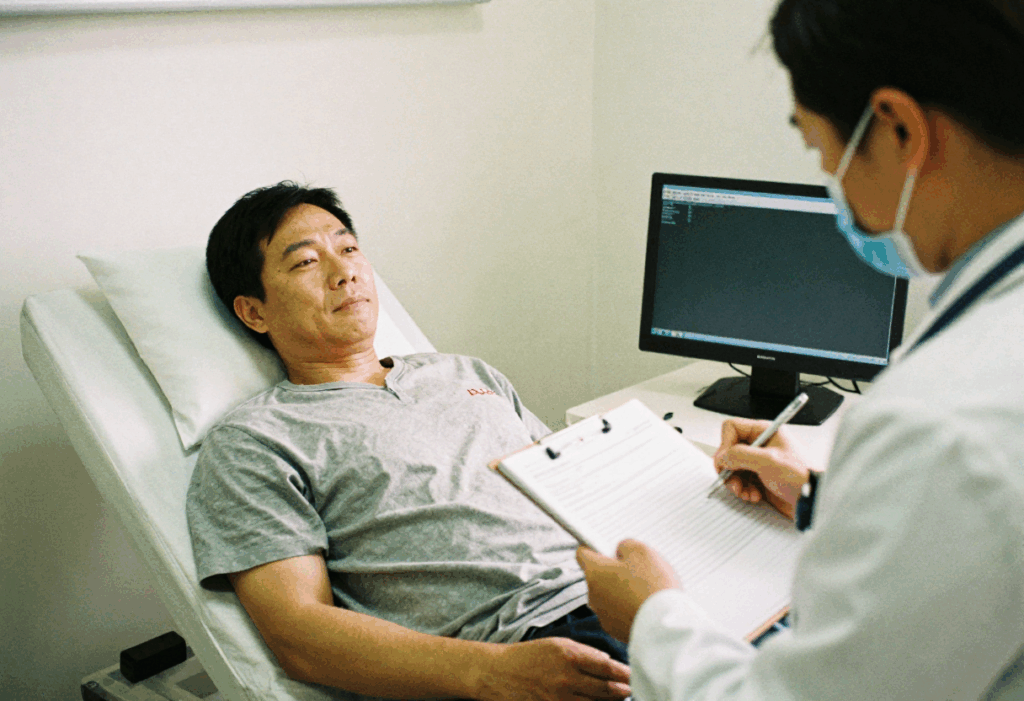
AI recording in healthcare is becoming increasingly common as clinics look for ways to reduce documentation burden and improve the quality of patient-doctor interactions. These tools—often referred to as AI-assisted documentation, AI transcription, or AI medical scribing—are designed to help clinicians capture accurate visit notes without constant typing.
If your doctor’s office uses AI recording in healthcare during appointments, it’s reasonable to ask what information is captured, how it’s protected, who can access it, how long it’s retained, and what choices you have as a patient. Transparency around AI recording in healthcare helps build trust and ensures you remain informed and in control of your medical information.
AI-assisted documentation—often referred to as AI recording, AI transcription, or AI medical scribing—helps clinicians capture accurate medical notes without constant typing.
If your clinic uses an AI medical scribe during your visit, these questions help you understand what is captured, how it’s protected, who can access it, how long it’s kept, and what choices you have.
Clinicians evaluating documentation tools like Dorascribe often ask similar questions, which are covered in Top 10 Questions Doctors Ask Before Switching to an AI Medical Scribe.
Why are patients hearing more about “AI recording” in healthcare
Many clinics are adopting AI-assisted documentation so providers can spend more time listening and less time typing. Instead of focusing on screens, clinicians can stay present during the visit while AI drafts the medical note in the background—an approach shown to strengthen communication and trust, as explained in Improve Doctor–Patient Relationships.
When used responsibly, the workflow is straightforward:
- The conversation is captured (often audio).
- The system produces a draft transcript and/or structured clinical note.
- The clinician reviews and edits the draft.
- Only the final clinician-approved note is added to the chart.
From a patient perspective, the key point is this: you should feel comfortable asking how the technology works and what safeguards are in place.

First, clarify what “recording” means at this clinic
1) “Are you recording audio, generating a transcript, or only creating a visit note?”
Short answer: Not all AI systems store audio; some generate a temporary transcript, while others create only a structured clinical note.
Why it matters:
The word recording can mean different things depending on the workflow. Modern AI scribes evolved specifically to reduce unnecessary data retention, which is part of the broader Evolution of Medical Scribing toward privacy-aware documentation.

2) “Is the AI processing in real time, or after the appointment?”
Short answer: Some tools draft notes during the visit, while others process information afterward.
Why it matters:
Real-time AI medical scribes can support a smoother wrap-up, allowing clinicians to review key points with patients before they leave—something Dorascribe explains in detail in AI Medical Scribe That Delivers in Real Time.
3) “Will the recording or transcript become part of my medical record—or only the final note?”
Short answer: In many workflows, only the clinician-approved final note becomes part of the chart.
Why it matters:
This distinction determines what is officially retained. Many concerns around AI documentation stem from misconceptions addressed in AI Medical Scribing: Debunking the Myths.
Consent and choice: what you can ask for
4) “How do you obtain consent for AI documentation?”
Short answer: Some clinics explain AI use verbally, while others include consent language in intake forms.
Why it matters:
Consent should be clear and understandable, not buried in paperwork. Clinics that prioritize transparency tend to follow principles outlined in Dorascribe FAQs.

5) “Can I decline AI recording and still receive care?”
Short answer: Many clinics can accommodate alternative documentation workflows.
Why it matters:
Patients should never feel pressured to agree to AI use. Clinicians themselves raise similar concerns when evaluating tools, as discussed in Top 10 Questions Doctors Ask Before Switching to an AI Medical Scribe.
6) “If I agree today, can I withdraw consent later?”
Short answer: Often yes, especially for future visits.
Why it matters:
Comfort levels change. Responsible documentation programs are designed to respect evolving patient preferences.
Data handling: storage, access, and retention
7) “Where is the data stored, and who hosts it?”
Short answer: Clinics typically rely on secure cloud infrastructure.
Why it matters:
Data location affects which privacy regulations apply. Strong AI documentation systems follow safeguards like those outlined in Ensuring Patient Privacy.
8) “Who can access the audio, transcript, or note?”
Short answer: Access should be limited and monitored.
Why it matters:
Best practice includes role-based access and audit logs—features highlighted in Medical Scribe Software: 5 Must-Have Features.

9) “How long do you keep the recording or transcript?”
Short answer: Retention periods vary by clinic.
Why it matters:
Patients should know how long data is retained and how deletion works.
10) “Is my data used to train AI models or for other purposes?”
Short answer: Policies vary—ask directly.
Why it matters:
Some AI medical scribe systems are designed so patient data is never used for training, reinforcing patient control.
11) “Are third-party services involved?”
Short answer: Many workflows include vendors.
Why it matters:
Clinics should vet vendors carefully and enforce safeguards, consistent with Dorascribe’s privacy-first documentation approach.
Accuracy, corrections, and clinical oversight
12) “Who reviews the output—and when?”
Short answer: The clinician should always review and edit the note before it’s finalized.
Why it matters:
AI output is a draft, not an authoritative record. Specialty examples in AI Scribes in Cardiology (2025) show how clinician oversight remains essential.
13) “What happens if the AI gets something wrong?”
Short answer: Ask how corrections are handled.
Why it matters:
Patients deserve a clear path to fix inaccuracies.
14) “How do I request changes?”
Short answer: Clinics usually have a standard correction process.
Why it matters:
Correction workflows are part of patient rights.
![]Clinician reviewing and editing AI-generated medical notes before finalizing.](https://dorascribe.ai/wp-content/uploads/2026/01/image-3-1024x701.png)
Situations where extra caution makes sense
Mental health visits, pediatric care, interpreter-assisted appointments, and telehealth visits may require additional clarity. Dorascribe explores these nuances in AI Medical Scribes for Telehealth.
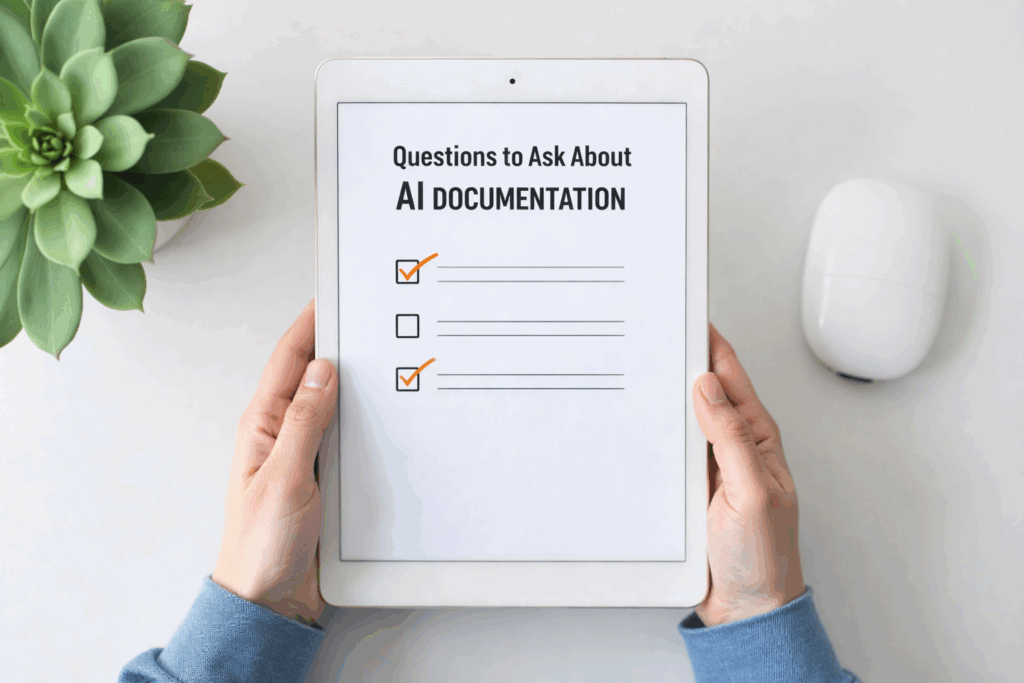
Patient checklist
- What exactly is captured (audio, transcript, summary, final note)?
- Is processing live or after the visit?
- How is consent obtained, and can I opt out?
- Where is data stored and for how long?
- Who can access it, and is access audited?
- Is any data used for training or secondary purposes?
- Who reviews the note before it’s final?
- How do I request corrections?
FAQs
Is my doctor “recording me,” or just using AI to help write the note?
It depends on the clinic’s workflow. Some systems capture audio temporarily to generate a draft, while others only create a structured note. Asking what is stored versus what becomes final helps clarify this.
Can I say no to AI documentation?
Often yes. Many clinics can offer alternative workflows if a patient prefers not to use AI-assisted documentation.
Will AI make the visit feel less personal?
Many clinicians adopt AI specifically to reduce typing so they can focus more on patients—an outcome Dorascribe highlights when discussing how better workflows improve patient interaction.
What should I listen for in a good explanation?
Clarity on consent, limited access, strong security controls, defined retention, and clinician review before notes are finalized.

For clinics: building patient trust with a simple explanation
Practices using AI documentation can train staff to explain it clearly at check-in:
“We use a secure documentation tool to draft your note so the clinician can focus on you. Everything is reviewed, and you can ask questions or opt out.”
Clinics often reference Dorascribe’s materials on AI medical scribing myths and the questions doctors ask before switching to an AI medical scribe to align internal policies with patient expectations.

Final thoughts
AI-assisted documentation can be a net positive when implemented with transparency, clinician review, and strong data protection. When patients know what to ask—and clinics are prepared to answer—AI becomes a support tool, not a concern.
To learn more about Dorascribe’s patient-centered documentation approach, explore Dorascribe FAQs and Ensuring Patient Privacy.