AI medical scribes are often discussed as tools for physicians, but the documentation burden is not limited to doctors. Nurse practitioners, physiotherapists, mental health clinicians, occupational therapists, and other allied health professionals also spend significant time creating notes, updating plans, and documenting follow-up.
AI scribes for nurse practitioners and allied health teams can help reduce that burden by creating structured drafts that match the visit type and clinical role. The key is flexibility: different disciplines need different note formats.
Why team-based care needs flexible documentation
Modern care is increasingly team-based. A single patient may interact with a nurse practitioner, physiotherapist, social worker, dietitian, and specialist over the course of a care plan. Each role documents different information, but all documentation must support continuity.
Common documentation needs include:
- Assessment and follow-up notes.
- Medication reviews and care plans.
- Functional progress updates.
- Patient education and self-management plans.
- Mental health progress notes.
- Referral letters and team communication.
- Remote care or phone follow-up summaries.
A rigid note format can create extra editing work. A useful AI scribe should adapt to the clinician’s discipline and the type of encounter.
How nurse practitioners can use AI scribes
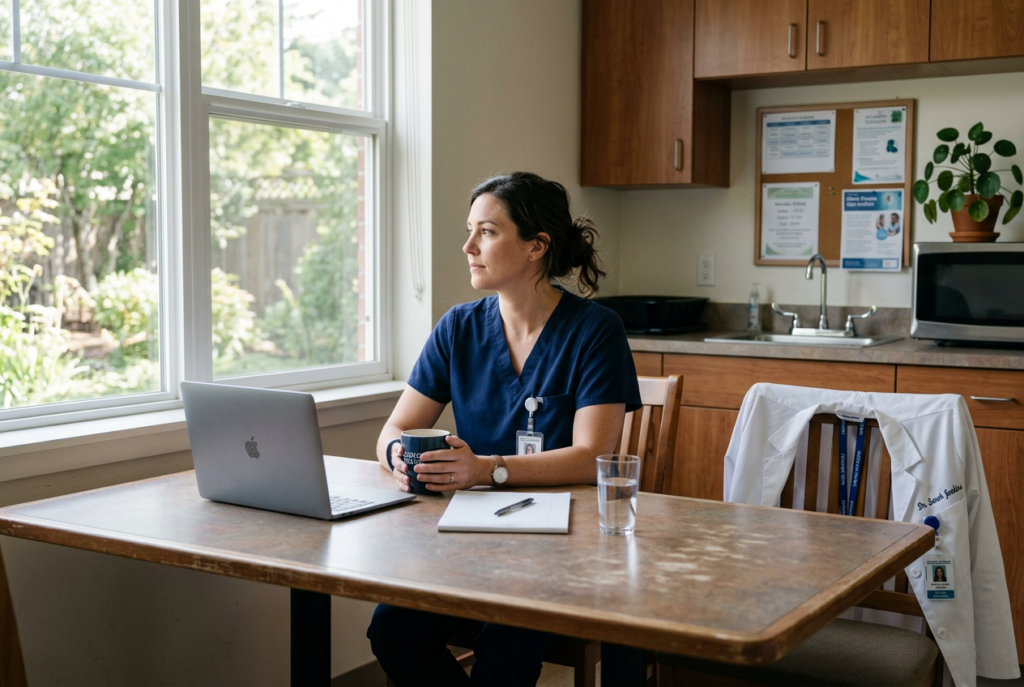
Nurse practitioners often manage complex, longitudinal care. Their notes may include assessment, diagnosis, medication changes, counseling, ordering investigations, referrals, and follow-up planning.
An AI scribe can help NPs by drafting structured notes that capture:
- Presenting concern and interval history.
- Medication changes and adherence.
- Relevant clinical findings.
- Assessment and plan.
- Patient education.
- Follow-up timing.
- Referral or investigation rationale.
This can be especially helpful in primary care, chronic disease management, and high-volume community clinics.
Why Allied Documentation Needs Role-Specific Language
Different clinicians describe care differently. A nurse practitioner note may use diagnostic and medication-management language, while an occupational therapy note may focus on function, barriers, adaptations, and goals. A mental health note may need careful language around risk, progress, and patient context.
AI-assisted documentation is most useful when it respects those differences. The note should sound appropriate for the clinician’s role and should avoid forcing every provider into a physician-style format.
How allied health teams benefit
Allied health workflows vary widely. A physiotherapist may need functional goals and exercise plans, while a mental health clinician may need progress, risk, and treatment themes. Dorascribe’s article on AI tools for physiotherapists shows how documentation support can be tailored to a specific discipline.
For allied health teams, AI scribes can help with:
- Progress notes after repeated visits.
- Goal tracking and plan updates.
- Patient instructions.
- Return-to-work or activity guidance.
- Interdisciplinary communication.
- Remote or hybrid care documentation.
AI documentation can also support virtual workflows. Dorascribe’s guide to AI scribes for remote patient care explains why cleaner follow-up notes matter when care happens outside the traditional exam room.
Templates are the difference between useful and generic
The same AI scribe output will not work for every clinician. That is why custom note templates are important. Templates help align the draft note with the visit type, specialty, and professional role.
For example:
- A nurse practitioner template may emphasize assessment, medication changes, investigations, and follow-up.
- A physiotherapy template may emphasize functional status, objective measures, treatment provided, and home exercises.
- A mental health template may emphasize themes, risk, interventions, and next session plan.
- An allied health follow-up template may emphasize progress, barriers, and patient instructions.
When templates are specific, clinicians spend less time deleting irrelevant sections and more time reviewing what matters.
Mobile documentation matters for care teams
Nurse practitioners and allied health clinicians do not always document from a desk. They may move between rooms, sites, community settings, or remote visits. Dorascribe’s article on AI scribing on mobile explains why iOS, Android, and web access can matter for real clinical workflows.
The more mobile the clinician’s workday, the more important it is for documentation tools to follow the workflow rather than force the clinician back to a workstation.
An AI scribe should help make those handoffs cleaner by preserving the encounter summary, plan, patient instructions, and follow-up responsibility in a format that is easy to scan.
Team communication is part of the value
For nurse practitioners and allied health teams, documentation is often read by another clinician. Clear notes help the next provider understand what changed, what was discussed, and what should happen next. This is especially important when care is shared across locations or disciplines.
What to review before signing
AI-generated notes should always be reviewed before finalization. For nurse practitioners and allied health teams, the review should focus on:
- Clinical accuracy.
- Correct professional scope and wording.
- Medication, measurement, and timeline details.
- Clear patient instructions.
- Follow-up responsibility.
- Relevant consent, safety, or risk details.
- Removal of unsupported or generic language.
The bottom line
AI scribes can support nurse practitioners and allied health teams when the documentation workflow is flexible enough for different roles. The best results come from structured drafts, profession-specific templates, mobile access, and careful clinician review.
For team-based care, AI-assisted documentation should make notes faster to produce, easier to review, and clearer for the next person involved in the patient’s care.