Quick Summary
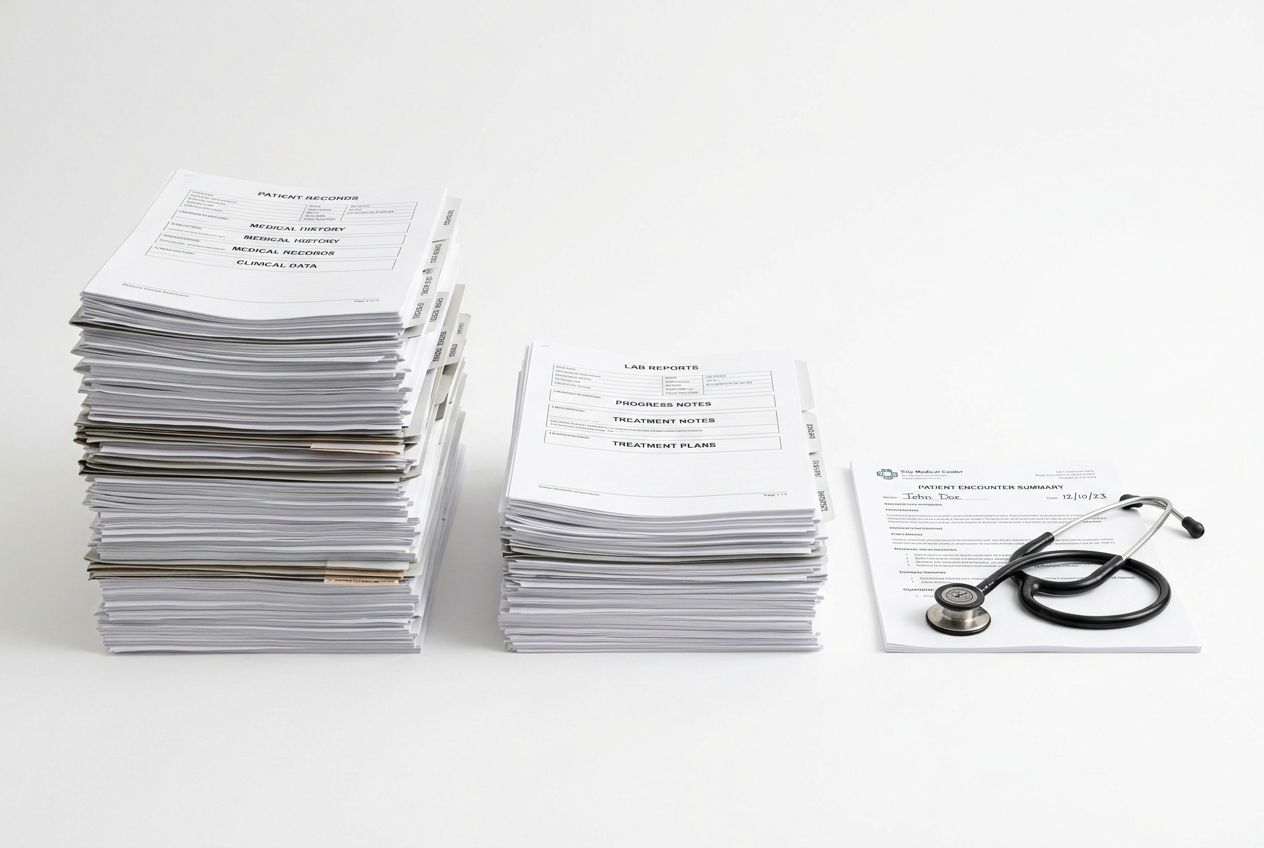
Physiotherapists in 2026 are not looking for “more software.” You want fewer clicks, less admin, cleaner documentation, and better follow-up.
The most practical AI tools for physiotherapists fall into four categories:
- AI medical scribes (documentation support)
- Exercise planning support tools (faster home programs and progressions)
- Scheduling + follow-up automation (reduce no-shows, improve adherence)
- Progress tracking + reporting (clear trends and better reassessment conversations)
If you’re choosing only one place to start, most clinics start with documentation because it affects every visit.

So What are the best AI tools for physiotherapists in 2026?
- AI medical scribes for faster, more consistent notes
- AI-assisted exercise planning to build programs faster (with clinician control)
- AI scheduling + follow-up systems to reduce no-shows and admin time
- AI progress tracking + reporting to monitor recovery and communicate outcomes
Key point: AI should support clinical judgment and workflow quality, not replace clinical reasoning.
1) AI Medical Scribe for Physiotherapists (Documentation Support)
Documentation is one of the most consistent time drains in physiotherapy. Even with templates, you still need to capture:
- assessment and reassessment details
- objective measures and progress
- treatment performed and patient response
- plan of care and follow-up
What this tool does
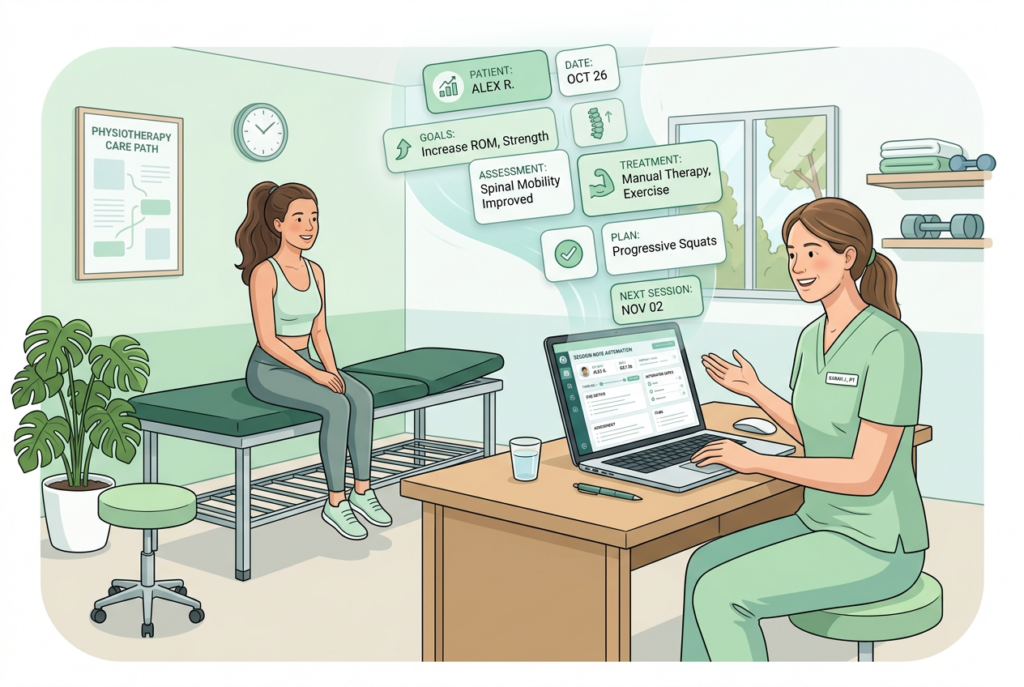
An AI medical scribe helps turn a conversation and visit context into a structured draft note. The clinician then reviews, edits, and finalizes before anything becomes part of the record.
Why it matters in physio
- less after-hours charting
- more consistent note structure across providers
- fewer missing details during busy clinic flow
- easier reassessment continuity (what changed, what didn’t)
What to look for (physio-specific)
- supports physio-style notes (assessment, follow-up, treatment plan, progress)
- easy editing and clear “finalize” control (draft ≠ final)
- strong privacy/security posture suitable for healthcare
- works smoothly with your current workflow (even if not integrated with your EMR)
Common pitfalls (what to avoid)
- tools that produce notes you can’t easily edit
- “black box” outputs with no traceability of what came from where
- unclear data retention, storage, and access controls
Clinical workflow reality (what this looks like in practice)
A realistic, low-friction workflow is usually:
- Start visit as normal (no “robot conversation”)
- Capture relevant details during the session (in-person or telehealth)
- AI produces a draft note
- You do a fast review pass:
- confirm objective measures
- confirm exercise dosage/progression
- confirm red flags / contraindications documented appropriately
- confirm plan and frequency
- Finalize and store in your clinic system
If your documentation is clean and quick to finalize, the “admin tail” after each patient shrinks significantly
DoraScribe is one example of an AI medical scribe that supports clinician-controlled documentation workflows. If you’re comparing options, focus on review control, note structure, privacy practices, and workflow fit.
Related reading:
2) AI-Assisted Exercise Planning and Program Support
Exercise prescription is central to physiotherapy—and it’s time-consuming when you’re building and adjusting plans all day.
What this tool does
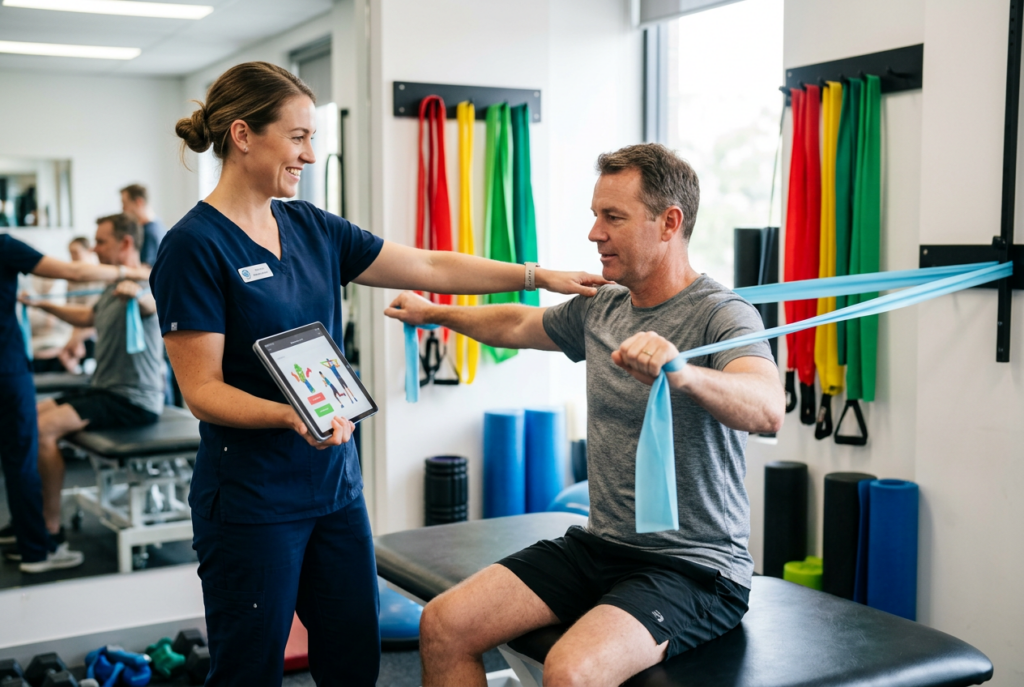
These tools support clinicians by:
- generating starter exercise programs
- suggesting progressions/regressions
- producing patient-friendly instructions
- tracking adherence (in some systems)
Important: It must remain clinician-controlled. The tool should speed up the work, not make decisions.
Why it matters in 2026
- faster creation of home programs
- easier personalization at scale
- clearer patient instructions (improves understanding)
- adherence support through reminders/tracking (when appropriate)
What to look for
- patient-facing clarity (simple instructions, visuals, language options)
- clinician override (easy manual edits)
- progression/regression logic you can adjust
- adherence tracking that’s optional and privacy-aware
Common use case
You build an initial plan, then quickly adjust at the next visit based on pain, range of motion, irritability, and adherence.
3) AI-Based Appointment Scheduling and Follow-Up Automation
No-shows and missed follow-ups quietly reduce clinic outcomes and revenue—and create chaos for staff.
What this tool does
Scheduling automation helps with:
- booking and rescheduling
- appointment reminders (SMS/email)
- follow-up prompts after missed appointments
- basic patient messaging with handoff to staff when needed
Why it matters in 2026
- fewer no-shows with reminders
- less front-desk back-and-forth
- better continuity of care (patients stay on plan)

What to look for
- reminders that are easy to configure (timing, language, opt-out)
- simple patient self-serve rescheduling
- escalation rules (when staff should step in)
- documentation of consent for messaging (where required)
Common use case
A clinic uses automated reminders and a “reschedule link,” improving attendance while reducing admin load.
4) AI-Driven Progress Tracking and Reporting
Physiotherapy is often multi-week care. Clear progress tracking improves:
- reassessment decisions
- patient motivation
- insurer/third-party reporting
- inter-provider communication
What this tool does
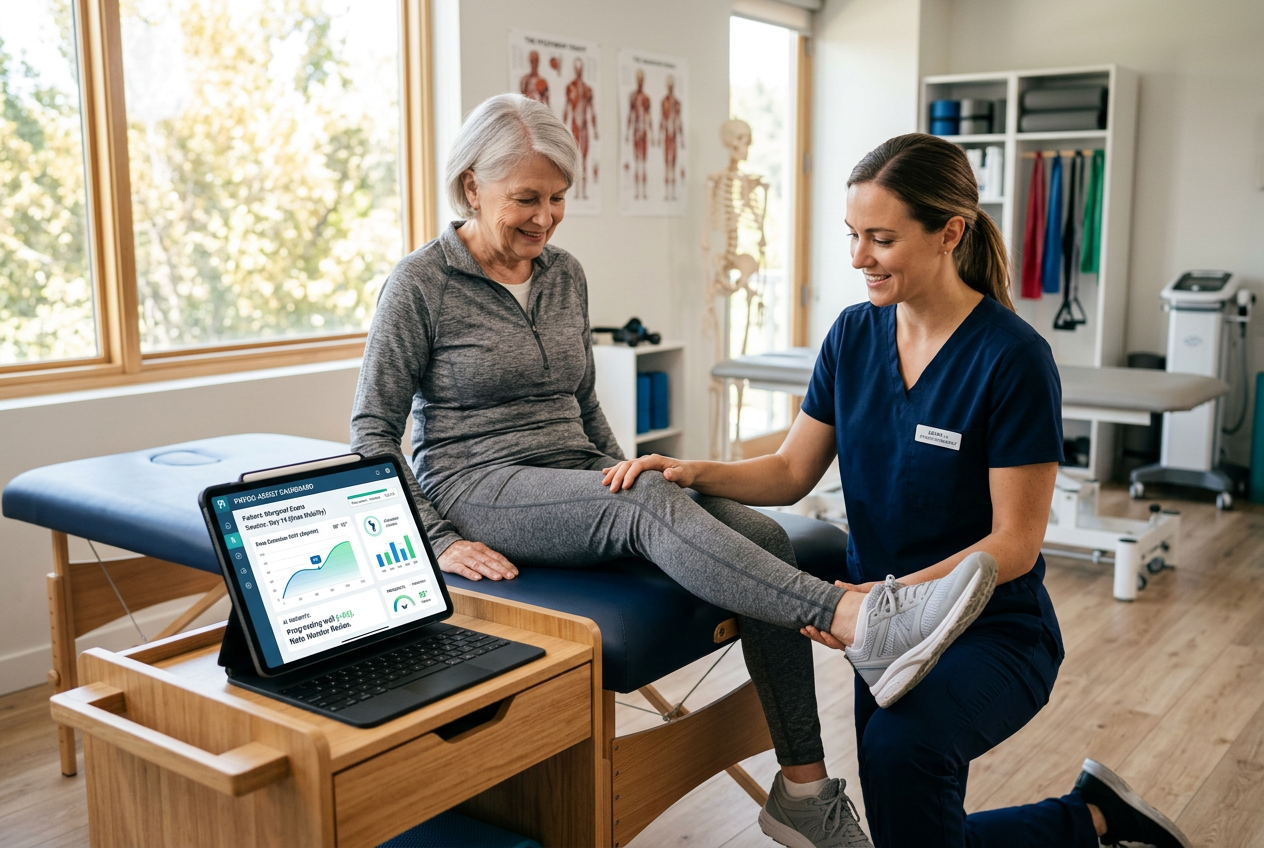
Progress tracking tools organize data over time (PROMs, objective measures, adherence, visit notes) into:
- trend summaries
- easy charts
- shareable progress reports
What to look for
- flexible tracking fields (different conditions need different data)
- simple, readable trend views (not overcomplicated dashboards)
- exportable reports
- patient-friendly summaries that support shared decision-making
Common use case
Before a reassessment, you review trend data and explain what improved, what plateaued, and what changes in the plan make sense next.

Safety and Quality: How to Use AI in Physio Without Cutting Corners
AI tools are most useful when they:
- reduce friction (admin work)
- improve consistency (notes and follow-up)
- keep clinician review central
Use extra caution when:
- documenting sensitive visits
- handling complex multi-morbidity or high-risk presentations
- relying on a tool with unclear data handling
Practical safeguard rule: If the output can affect documentation quality or clinical decisions, it must be reviewable and editable.
Recommended Rollout Order (for most clinics)
- AI medical scribe (highest frequency time-saver)
- Scheduling + follow-up automation (operations + continuity)
- Progress tracking/reporting (better reassessment visibility)
- Exercise planning support (workflow enhancement)
Start with one workflow, prove value, then expand.
How to Choose AI Tools for Physiotherapists (Clinic Checklist)
Before adopting any AI tool, use this checklist:
1) Does it save time every week?
If it’s impressive but doesn’t reduce admin or improve care delivery, it’s not a priority.
2) Can clinicians control and edit outputs?
Drafts must be editable. Notes must not be “auto-finalized.”
3) Is it easy for staff to learn?
Daily-use tools should feel simple within 1–2 weeks, not require constant troubleshooting.
4) Does it fit your existing workflow?
Avoid tools that force a total clinic redesign to work.
5) Is it appropriate for healthcare privacy requirements?
Confirm:
- where data is stored
- who can access it
- retention and deletion policies
- how patient consent is handled (where required)
Final Thoughts
The best AI tools for physiotherapists are not about replacing care. They’re about removing friction around care.
If you want the clearest operational impact, start with documentation + follow-up consistency.
Ready to reduce documentation time?
Found an error or want an update? Email help@dorascribe.com and we’ll review it.

FAQ: AI Tools for Physiotherapists (2026)
What are AI tools for physiotherapists?
AI tools for physiotherapists are software tools that support tasks like note drafting, scheduling, exercise program support, and progress tracking. They are designed to save time and improve workflow efficiency—not replace clinical judgment.
What is the best AI tool for a physiotherapy clinic to start with?
For most clinics, an AI medical scribe is the best first step because documentation affects every patient visit and is often the biggest ongoing time drain.
Can AI replace physiotherapists?
No. Physiotherapy depends on clinical reasoning, physical assessment, communication, and hands-on care. AI can support documentation and workflow tasks, but it does not replace clinical decision-making.
Are AI-generated notes safe to use in physiotherapy?
They can be used safely when the clinician reviews and finalizes the note. The AI output should be treated as a draft, and clinics should verify privacy/security practices before adoption.
Do appointment reminders actually reduce no-shows?
Evidence suggests that reminder systems (including text reminders) can improve attendance and reduce no-show rates in healthcare settings.
Do digital tools improve home exercise adherence?
Evidence suggests digital interventions can improve short-term adherence to home exercise programs, though long-term effects vary.
What should my clinic check before using AI tools with patient data?
At minimum: consent requirements, data storage location, access controls, retention/deletion policies, and whether the tool meets your jurisdiction’s privacy expectations.
Should I use one platform for everything?
Not necessarily. Many clinics use a small set of tools that integrate well, rather than one large system that’s hard to adopt.
Evidence & Sources
- Hasvold PE, Wootton R. Use of telephone and SMS reminders to improve attendance at hospital appointments: a systematic review. 2011. (PubMed Central)
- McLean SM, et al. Appointment reminder systems are effective but not optimal. 2016. (PubMed Central)
- Robotham D, et al. Using digital notifications to improve attendance in clinic: systematic review and meta-analysis. 2016. (BMJ Open)
- Lang S, et al. Do digital interventions increase adherence to home exercise programmes? Systematic review. 2022. (PubMed Central)
- Olson KD, et al. Ambient AI Scribes to Reduce Administrative Burden and Improve Clinician Experience. 2025. (JAMA Network Open)