Quick answer
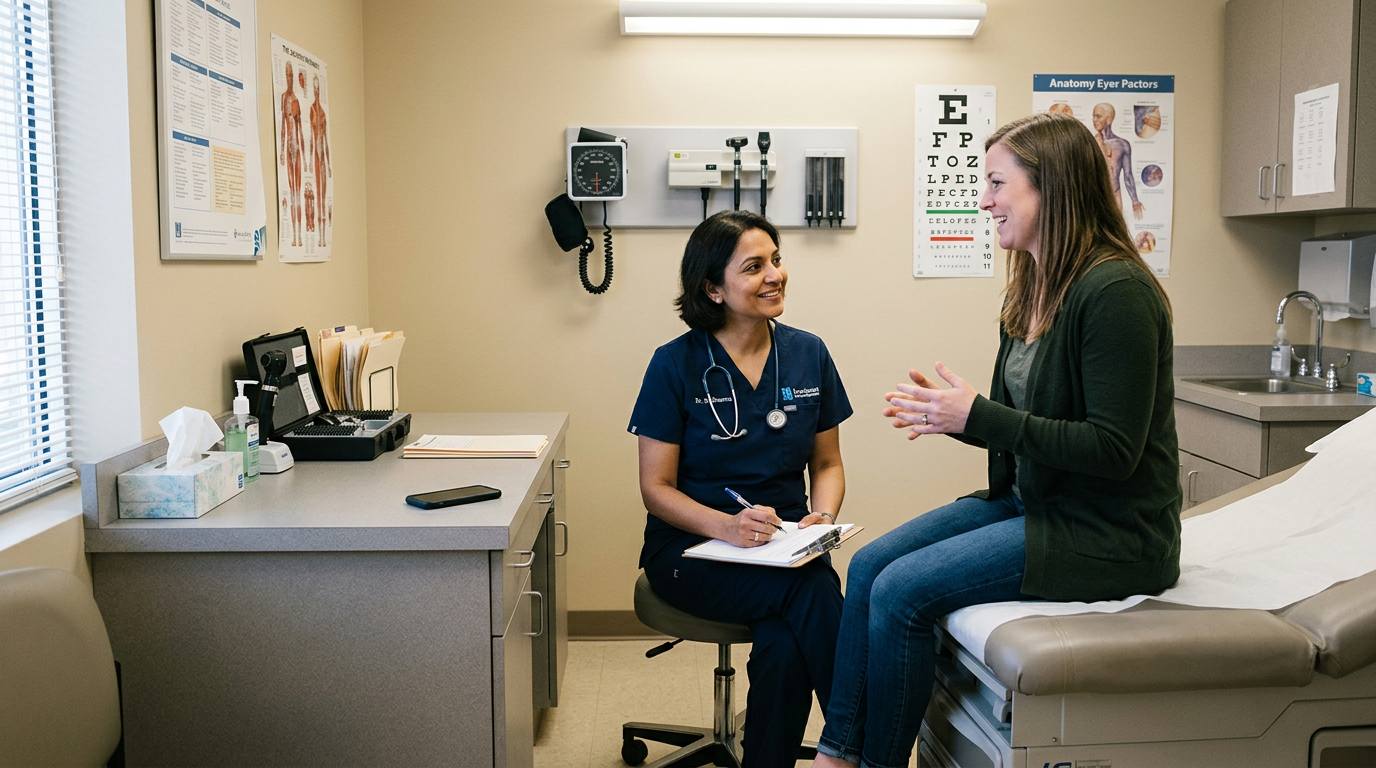
A real-time AI medical scribe drafts a structured note during (or immediately at the end of) the encounter, so you can verify details while they’re fresh. “Real time” is about workflow timing and clinician control, not about permanently recording everything.
A safe real-time workflow looks like: draft → clinician review → targeted edits → sign → export.
Why real-time scribing matters more in 2026
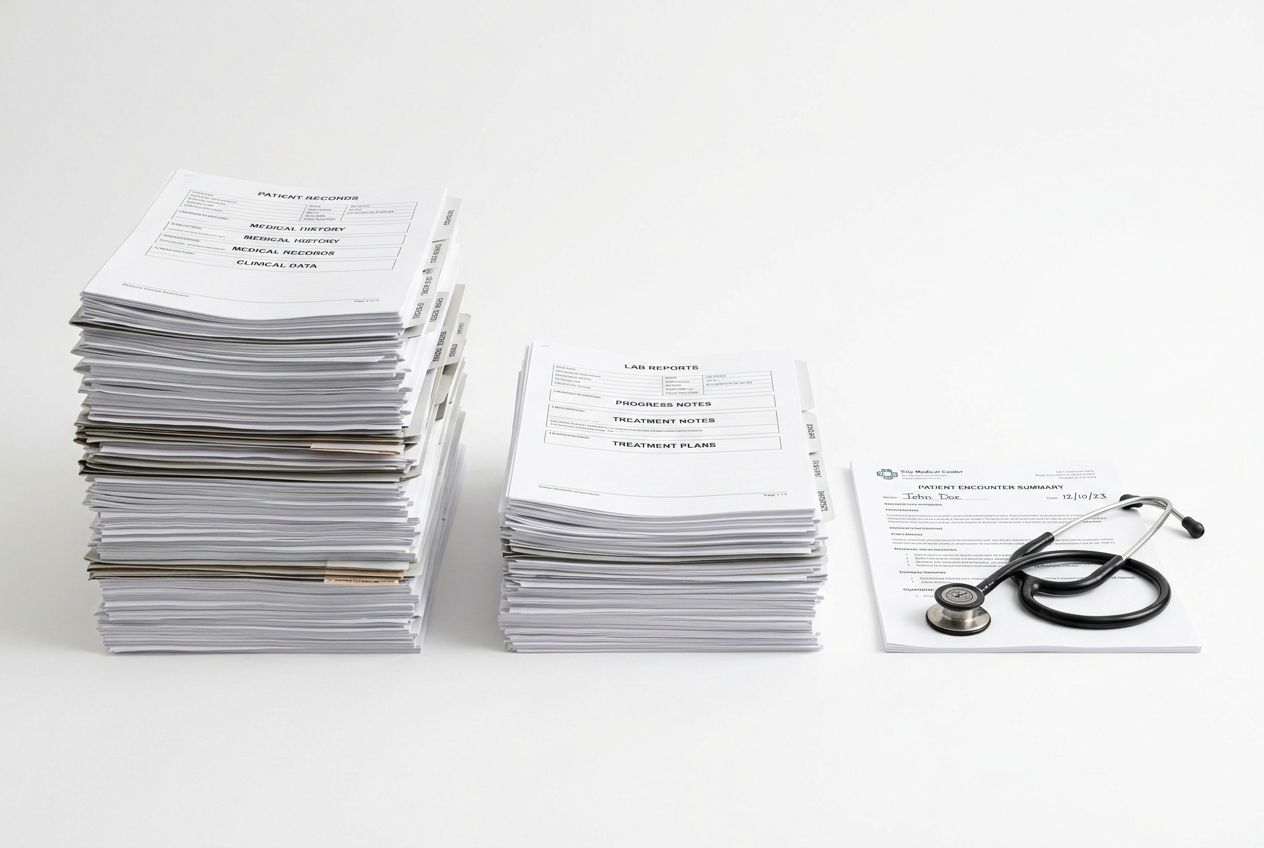
Most documentation pain is not the act of typing. It’s the cognitive load of reconstructing a visit later—often after clinic hours.
Time-motion research has shown physicians spend substantial time in EHR/desk work, including after-hours documentation. (dorascribe.ai)
Real-time drafting helps by:
- reducing “rebuild from memory” after the patient leaves
- supporting clearer, more consistent note structure
- shortening time-to-close chart (which improves operations downstream)
This is part of a broader shift outlined in the evolution of medical scribing: AI is increasingly expected to support documentation without replacing clinician judgment.
What “real time” is (and isn’t)
Real-time AI scribing
- drafts note sections while the conversation is happening
- supports immediate review and clarification
- encourages same-day chart completion

Post-visit AI documentation
- processes audio after the appointment
- pushes review into evenings/weekends
- increases the chance of missing context or small details
In virtual care, real-time drafting can be especially helpful because context is harder to reconstruct later. See: AI medical scribes for telehealth.
Accuracy in 2026: beyond transcription
Clinicians don’t need a prettier transcript. They need a draft note that:
- reflects clinical context
- organizes information into meaningful sections
- avoids assumptions and unsupported conclusions
- makes it easy to verify medications, key negatives, and follow-up steps
This is even more obvious in higher-stakes documentation (example: AI scribes in cardiology).
A growing clinical literature on ambient/AI scribes suggests potential reductions in documentation burden, with clinician review remaining central. (dorascribe.ai)
Patient trust, consent, and transparency
In 2026, “surprise recording” is a trust failure.
A practical approach is a short disclosure + opt-out:
“I use a tool that drafts my note from our conversation. I review and edit it before it goes in your chart. If you prefer, I can turn it off.”
For patient-facing expectations, see AI recording in healthcare and your internal policy. For privacy fundamentals, see ensuring patient privacy and data security.
Regional note: frameworks differ (HIPAA in the U.S., PHIPA/PIPEDA in Canada, GDPR in the EU/UK). Your clinic policy and legal guidance are the deciding authority—but the evaluation questions are the same: storage, access controls, retention, and deletion.

What to look for in a real-time AI medical scribe
Use this checklist when you evaluate tools:
- Clinician control (draft ≠ final)
Notes must remain drafts until you sign. - Editing speed
If you can’t correct meds, key negatives, and plan details quickly, adoption fails. - Template control
You should be able to match your visit types (new, follow-up, procedure, chronic care). Custom templates are a practical differentiator. - Multi-speaker handling
Real clinics include overlapping speech and interruptions. Test in your real environment. - Telehealth readiness
Audio quality variability is normal. A real-time workflow should still make review easy. - Clear answers on privacy
If the vendor can’t answer storage/access/retention questions plainly, don’t proceed.
Where DoraScribe fits
DoraScribe is built for clinician-controlled documentation: draft → edit → sign.
DoraScribe details that matter in real-time workflows:
- Custom note templates (match your visit types and preferred structure)
- Multilingual workflows (useful in multilingual clinics)
- Draft clinical letters from encounter context (referrals, work/school, insurance, prescription-related letters) for clinician review/signature
- Voice-first workflow support (see: integrated voice recognition)
If you’re comparing tools, use: AI medical scribing myths debunked and Top questions doctors ask before switching.

FAQ
Is real-time AI medical scribing safe?
It can be, when clinicians review and approve documentation before finalization.
Does “real time” mean everything is recorded and stored?
No. It refers to when the draft is generated. Storage/retention is a separate policy decision.
Can real-time AI scribes work during telehealth visits?
Yes—if audio quality is adequate and the review workflow is frictionless.
Do real-time AI scribes replace clinicians?
No. They support documentation. Clinical judgment remains entirely with the clinician.
Evidence & sources (selected)
- Physician time and EHR documentation burden (time-motion study, 2016): https://pubmed.ncbi.nlm.nih.gov/27595430/
- Ambient AI scribes and documentation burden outcomes (JAMA Network Open, 2025): https://jamanetwork.com/journals/jamanetworkopen/fullarticle/2839542
Next steps: Review the DoraScribe FAQs or start a workflow comparison from your most common visit type.