The Multilingual Documentation Challenge Has Intensified
Multilingual clinical documentation is no longer a niche issue — it’s a daily operational reality.
In 2026, clinics across North America are serving increasingly diverse populations. In many metropolitan areas, 35–45% of patients speak a primary language other than English. Providers routinely encounter bilingual visits, mid-sentence language switching, and culturally nuanced communication.
Without the right tools, multilingual documentation leads to:
- Delayed note completion
- Increased error risk
- Administrative fatigue
- After-hours charting
- Provider burnout
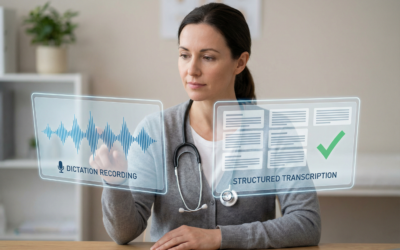
This is exactly where multilingual AI scribes have evolved. What began as helpful transcription software in 2025 has matured into structured, context-aware documentation support — similar to how AI generated doctors notes now transform everyday clinical workflows.

What’s Changed from 2025 to 2026?
In 2025:
- Multilingual transcription accuracy was strong but required editing.
- Real-time structured note generation was improving.
- Language-switching could reduce contextual clarity.
In 2026:
- Context-aware AI models better interpret medical terminology across languages.
- Hybrid language conversations are captured more accurately.
- Structured SOAP notes generate instantly with minimal correction.
- Accent recognition has improved significantly.
- Documentation accuracy rates have increased thanks to improved medical language modeling.
Modern multilingual AI now works more like a real-time AI medical scribe — capturing the encounter as it unfolds and structuring it automatically.
Clinics are no longer testing.
They are implementing.
Breaking Language Barriers with Structured AI
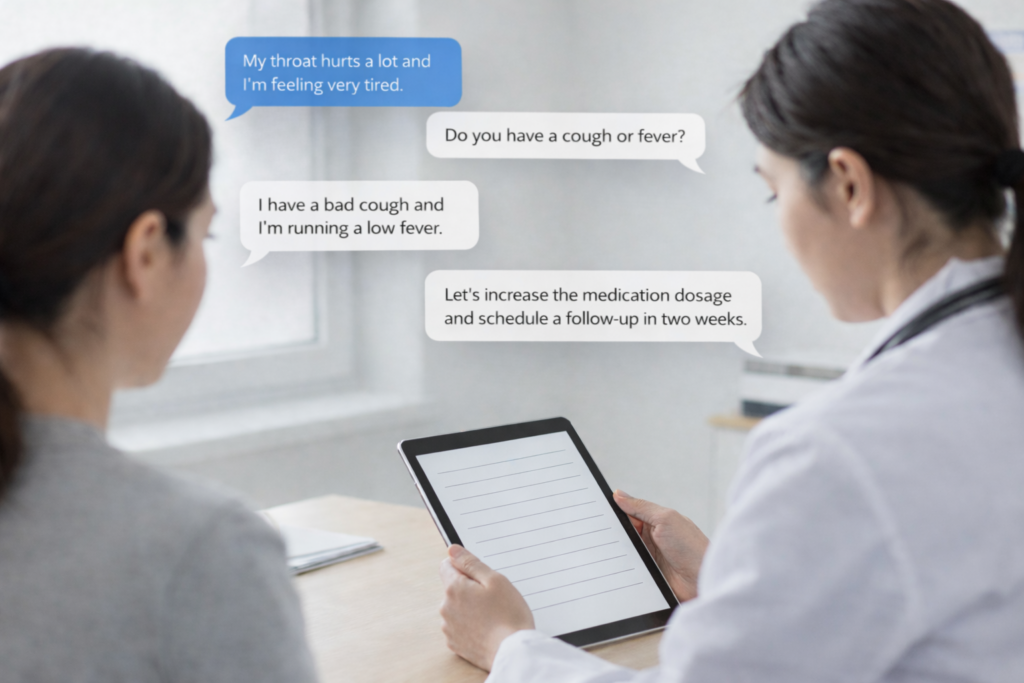
Multilingual documentation requires more than translation. It demands:
- Clinical context preservation
- Correct medical terminology
- Accurate speaker identification
- Structured output formatting
In 2026, multilingual AI scribes can:
- Transcribe across 10+ supported languages
- Maintain SOAP or specialty-specific formatting
- Capture clinically relevant details during language switching
- Reduce post-visit editing time
For clinicians in psychiatry, where nuance matters deeply, this evolution mirrors the impact seen in AI scribe psychiatry workflows — where capturing tone and phrasing is critical.
The result?
More accurate documentation.
Less correction.
Stronger clinical confidence.

Time Savings: Now Measurable and Consistent
In 2025, time savings were anecdotal.
In 2026, they are measurable.
Clinics integrating multilingual medical transcription AI report:
- Up to 70% faster documentation completion
- 5–7 hours saved per provider per week
- Reduced after-hours charting
- Improved appointment throughput
The question is no longer “Does AI save time?”
It’s “How much time are we still losing without it?”
If you’re evaluating impact, this breakdown of whether AI scribes save time provides helpful benchmarks.
In multilingual settings, especially, eliminating manual translation or rewriting has a compounding effect on efficiency.
Enhancing Patient Engagement Through Workflow Automation
One of the biggest improvements in 2026 is reduced intrusiveness.
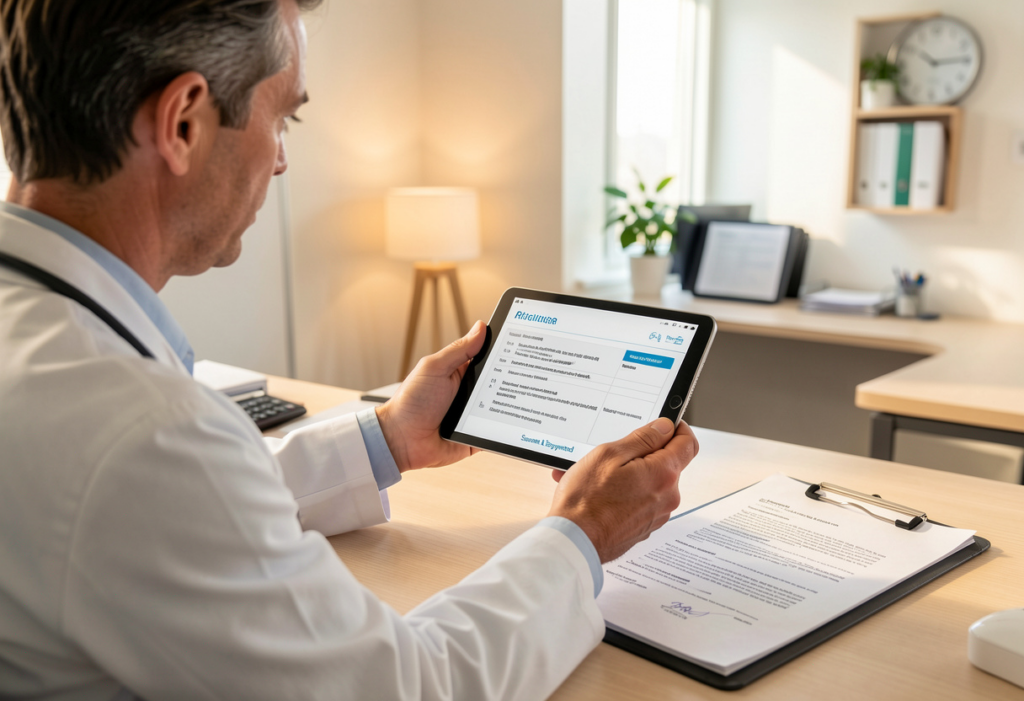
Providers don’t need to monitor transcripts constantly. With improved contextual modeling, clinicians can:
- Maintain eye contact
- Focus on body language
- Engage without toggling between systems
- Complete documentation during the visit
This improves both efficiency and trust.
Patients often ask about recording or AI documentation. Clinics can guide them using resources like questions to ask your doctor about AI recording to maintain transparency and patient comfort.
When patients understand the process, trust increases.

Compliance & Security Expectations Are Higher in 2026
With AI adoption expanding, compliance scrutiny has intensified.
Clinics must ensure:
- HIPAA-compliant data handling
- Secure encryption pipelines
- Proper consent workflows
- Audit-ready documentation
Security is no longer optional — it’s foundational.
If your clinic is evaluating safety protocols, reviewinп is AI transcription safe? can clarify what standards to look for.
Multilingual medical transcription AI must balance speed with protection.
Dorascribe continues to prioritize secure infrastructure alongside documentation accuracy.

A Real 2026 Clinical Scenario
Dr. Elena Torres practices internal medicine in a multilingual urban community. She conducts daily visits in English and Spanish, with frequent code-switching.
In 2025, her transcription tool worked — but required editing.
In 2026, with improved multilingual AI:
- Structured SOAP notes generate automatically
- Language switching is accurately captured
- Terminology remains clinically precise
- Notes are finalized before the next patient arrives
Her outcomes:
- 6+ hours saved weekly
- Reduced documentation fatigue
- Improved patient interaction
- Fewer chart corrections
Small practices benefit significantly as well. For independent clinics evaluating options, this guide on the best AI medical scribe for small practice outlines what to prioritize.
Getting Started in 2026
Adoption is simpler than ever.
1. Sign Up
Create a FREE account and access 20 transcriptions monthly.
2. Test
Role-play a consultation in multiple languages.
Generate a structured note.
Review and adjust.
The process takes 5–10 minutes.
3. Apply in Practice
Start using during real consultations.
Upgrade if volume increases.
Clinics typically scale usage quickly once workflow improvements become clear.
Why Dorascribe in 2026?
Expanded Language Intelligence
10+ supported languages with improved dialect recognition.
Structured Note Precision
Automatically generates:
- SOAP notes
- Custom templates
- Specialty-specific formats
Multispecialty Adaptability
Effective across:
- Family medicine
- Internal medicine
- Psychiatry
- Community clinics
- Multilingual practices
Proven Documentation Efficiency
Clinics report:
- Faster turnaround
- Reduced burnout
- Higher documentation accuracy
The same AI infrastructure powering AI-generated doctors notes and real-time medical scribing now delivers advanced multilingual transcription support.
The Bottom Line: 2026 Is About Operational Standards
In 2025, multilingual AI was innovative.
In 2026, it’s infrastructure.
As patient populations diversify, documentation tools must keep pace. Multilingual medical transcription AI is now essential for:
- Accuracy
- Efficiency
- Compliance
- Provider wellbeing
- Patient trust
If your clinic is still relying on manual processes or outdated transcription tools, you’re likely losing hours each week.
Ready to modernize your multilingual documentation workflow?
Book a demo with Dorascribe and experience 2026-level multilingual AI scribing in action.