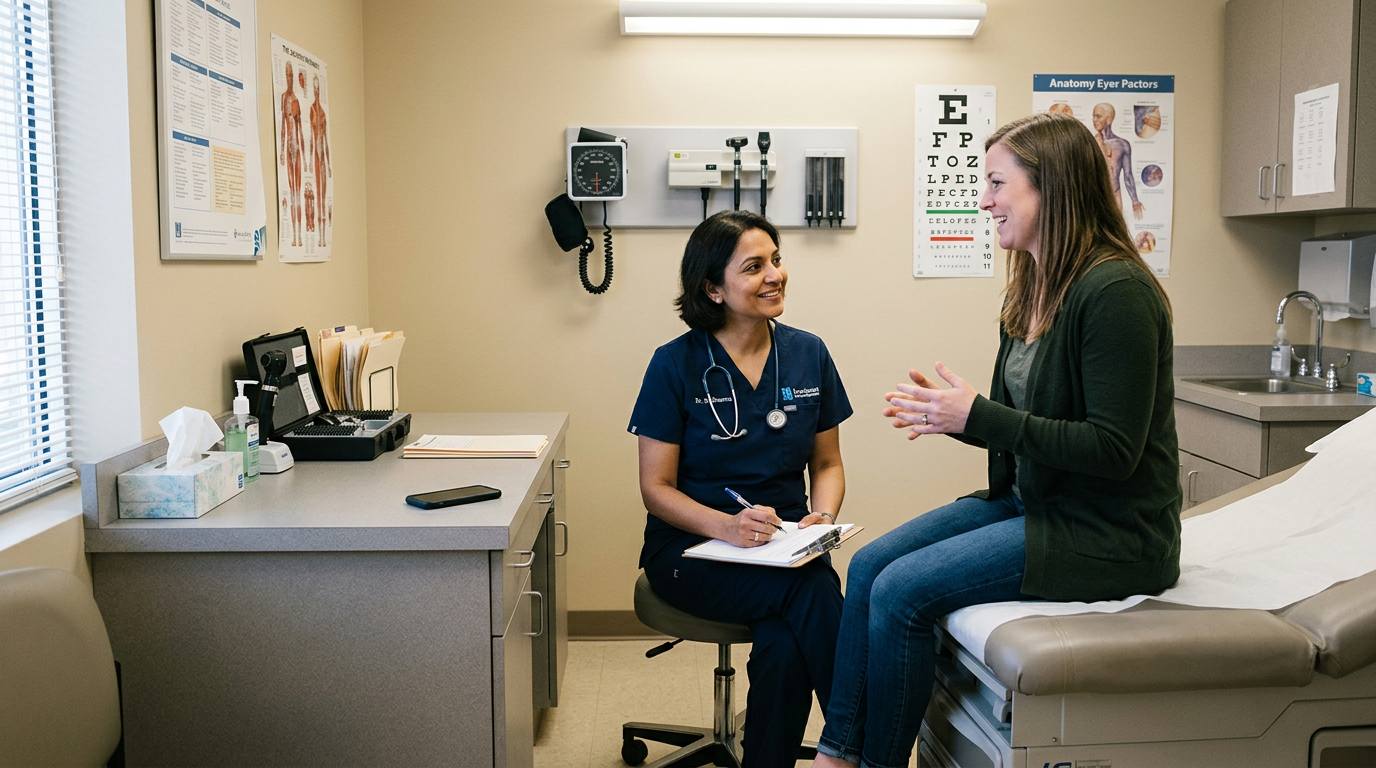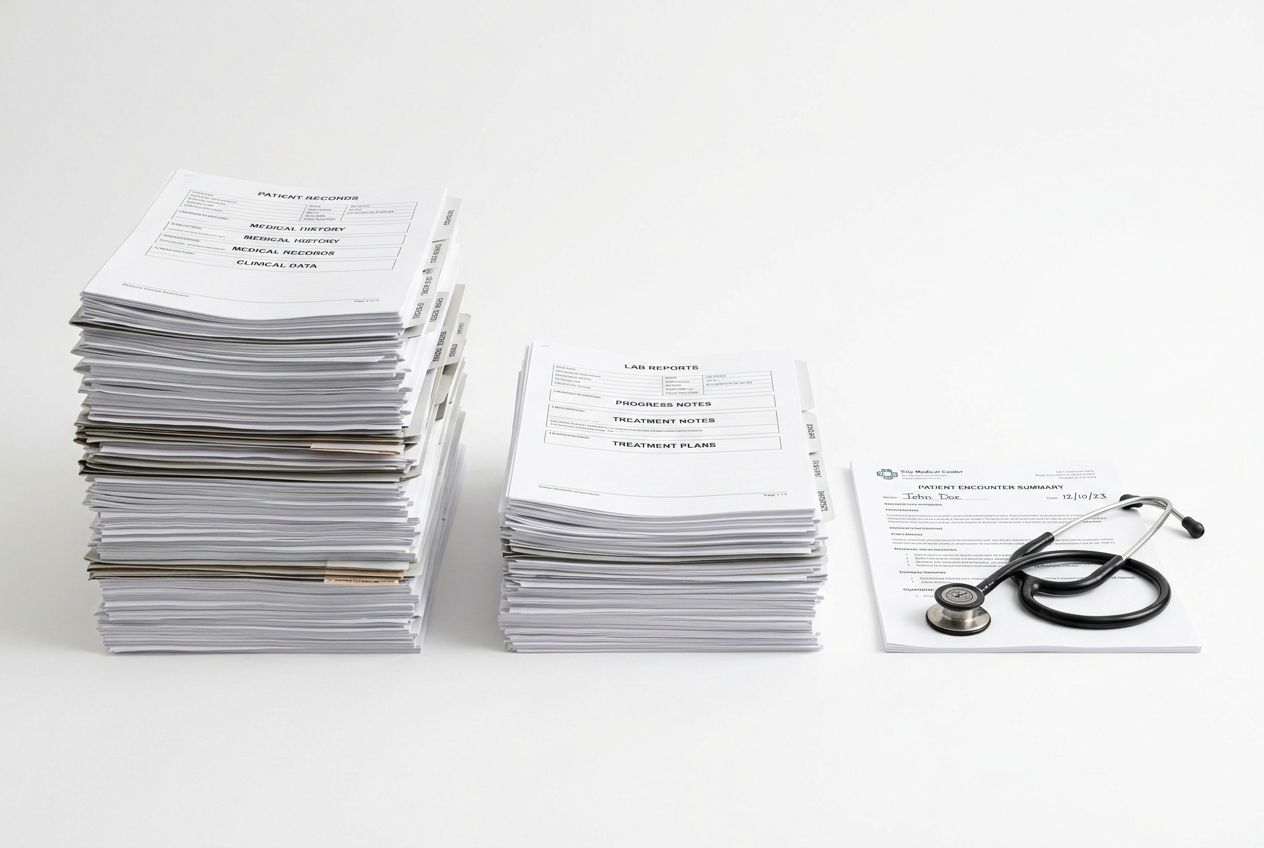
How family physicians can use AI-assisted documentation while keeping clinical review, privacy and patient communication at the centre.
An AI medical scribe for family doctors can turn a patient conversation into a structured draft note for the physician to review. That can be useful in family medicine, where a single clinic day may include chronic disease follow-ups, new symptoms, preventive care, medication reviews, mental health discussions and paperwork.
The goal is not to remove the doctor from documentation. It is to reduce the blank-page work after a visit while leaving the family physician responsible for checking the history, examination, assessment, plan and follow-up instructions before the note is signed.
Quick answer: The best AI scribe workflow for family medicine starts small: choose a few common visit types, use the right note template, explain the process to patients, generate a draft and measure how much review time is actually saved.
Clinical and privacy note: This article provides general information, not medical or legal advice. Requirements vary by jurisdiction and clinic policy. Clinicians must review and approve all AI-assisted documentation.
What does an AI medical scribe do in family medicine?
An AI medical scribe listens to or processes the clinical encounter and produces a draft note based on the conversation. Depending on the product and workflow, the draft may follow a SOAP structure, a custom clinic template or another visit-specific format.
A useful system should do more than provide a transcript. Family doctors need a concise clinical draft that separates the history, relevant findings, assessment and plan in a predictable structure. The physician then edits the draft, adds information that was not spoken aloud and signs the final note in the usual charting system.
Dorascribe’s AI medical scribe workflow follows this draft-review-finalize model and supports structured notes, custom templates, referral letters and patient handouts.

Why family medicine is a strong use case
Family medicine documentation is broad rather than repetitive. A family physician may move from a diabetes review to an acute complaint, a preventive visit and a complex discussion involving several conditions. That variety makes rigid one-template systems frustrating, but it also creates many opportunities to reduce repetitive typing.
An AI scribe may be particularly useful when it helps a family doctor:
- stay focused on the patient instead of building the note during the conversation;
- create a first draft before details from the visit become harder to recall;
- keep routine sections and follow-up instructions more consistent;
- reduce the number of unfinished notes carried into the evening; and
- prepare related documentation, such as referral letters or patient instructions, for review.
The practical benefit depends on net time saved after editing. Dorascribe’s review of whether AI scribes save doctors time explains why draft quality and review time matter more than generation speed alone.
Family medicine visits that are sensible starting points
The safest way to begin is with familiar visits that have a reasonably predictable structure. A doctor does not need to use the scribe for every encounter on the first day. Good early candidates include:
- routine chronic disease follow-ups;
- medication reviews;
- straightforward new complaints;
- preventive care visits;
- virtual follow-ups; and
- visits that regularly require a referral or patient handout.
Add complex visits only after learning how the tool handles several problems, interruptions, caregivers, interpreters and sensitive discussions.

A practical seven-step workflow for family doctors
- Choose the visit type and the appropriate note template before the encounter.
- Follow the clinic’s patient-notification and consent process before recording or processing the conversation.
- Start the consult and conduct the visit normally. Do not distort the clinical conversation simply to feed the software.
- State relevant findings that the scribe cannot observe, including examination findings, point-of-care results or clinical reasoning that was not discussed aloud.
- Generate the draft and review it while the encounter is still fresh.
- Correct omissions, remove unsupported statements and verify medications, doses, allergies, diagnoses, orders and follow-up instructions.
- Move the approved note into the normal charting workflow and sign it according to clinic policy.
Doctors who want a simple rollout can use Dorascribe’s guide on how to start automating medical notes. It covers both individual adoption and a small clinic pilot.
What family doctors should verify in every AI-generated note
AI output should always be treated as a draft. A fluent sentence can still contain an omission, incorrect detail or unsupported inference. Family physicians should use a consistent review checkpoint before signing.
- Patient identity, visit date and encounter context.
- Medication names, doses, changes, adherence and adverse effects.
- Allergies and clinically important negatives.
- Physical examination and investigation findings, especially anything not spoken aloud.
- Problem list, assessment and the relationship between each problem and its plan.
- Referrals, prescriptions, investigations and monitoring instructions.
- Follow-up interval, return precautions and patient instructions.
- Any wording that sounds more certain than the actual clinical discussion.
A repeatable verification routine is more reliable than reading each draft casually. It also makes it easier to identify whether a template or prompt should be adjusted.
Templates matter more than one universal note
Family doctors rarely use one note structure for everything. A long universal template can produce bloated drafts and make review slower. A better approach is to start with two or three visit-type templates that cover a large share of the week.
- General follow-up: interval history, relevant review, assessment, plan and follow-up.
- Chronic disease review: target measures, medication reconciliation, monitoring and next steps.
- New problem: symptom history, red flags, focused examination, differential or assessment and plan.
- Medication review: indication, response, adherence, side effects, changes and monitoring.
- Virtual follow-up: speaker context, reported versus observed information, plan and safety instructions.
See Dorascribe’s guide to custom note templates for common visit types for a practical template-building process. Keep each template lean enough that the final draft is faster to review than a generic note.
Patient consent and privacy should be part of the workflow
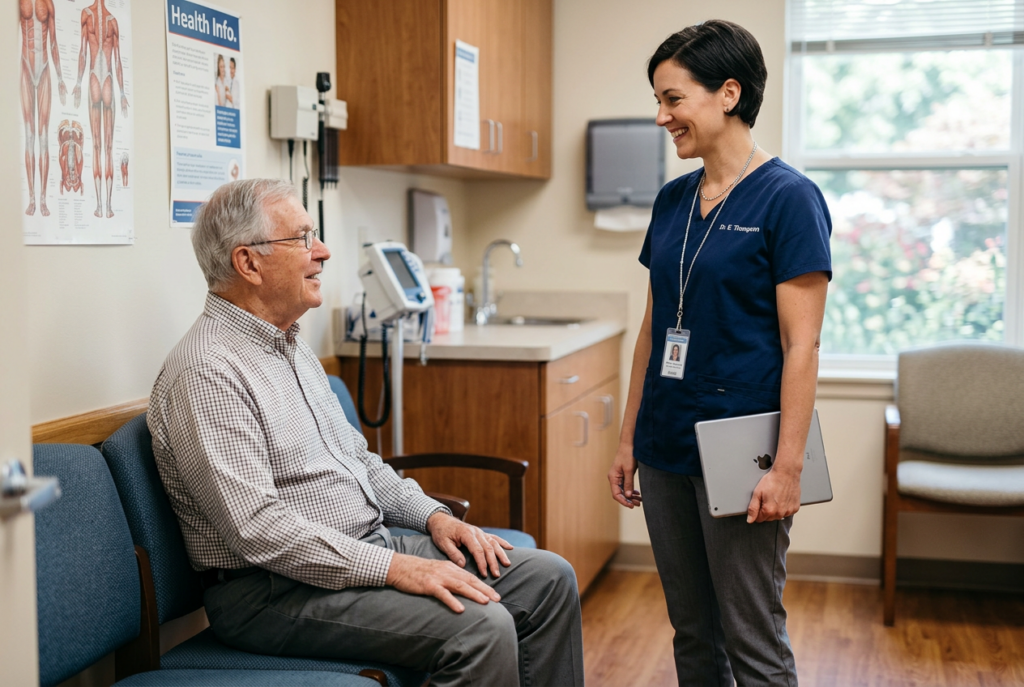
A family doctor should know what the scribe collects, where information is processed, whether audio or transcripts are retained, who can access the data and how deletion requests are handled. The answers should be reviewed against applicable privacy law, professional obligations and clinic policy.
Patient communication should be simple and accurate. Dorascribe’s AI scribe patient consent guide explains how consent fits into a broader privacy workflow, while the guide to AI transcription safety outlines practical vendor questions.
Clinics should also plan for patients who prefer not to use an AI scribe. The alternative documentation process should be easy to follow and should not create pressure for the patient.
Buying personally versus adopting across a clinic
For an individual family doctor
A physician purchasing an AI scribe personally can test it with common visit types. Before using patient information, confirm that the product and workflow are permitted by the clinic, health organization or custodian responsible for the record. Personal purchase does not remove privacy, security or documentation obligations.
For a family medicine clinic
Clinic-level adoption requires more coordination. The clinic should decide who approves vendors, which templates are standard, how users are added or removed, how patient questions are handled, what support is available and how performance is reviewed after launch.
Small teams can use Dorascribe’s framework for choosing an AI medical scribe for a small practice and its list of questions to ask before switching AI scribes.
Features family doctors should compare
A useful evaluation should cover the full documentation workflow, not only transcription accuracy.
- Draft quality: Does the output separate history, findings, assessment and plan appropriately?
- Custom templates: Can the doctor create structures for common family medicine visits?
- Editing control: Can unsupported or unnecessary content be corrected quickly?
- Privacy and security: Can the vendor answer questions about processing, access, retention and deletion?
- EMR workflow: Is it straightforward to move the reviewed note into the chart?
- Support and onboarding: Can an individual doctor start easily, and can a clinic manage multiple users?
Family physicians comparing a wider technology stack may also find Dorascribe’s overview of AI apps for general practitioners useful.

How to test whether an AI scribe is actually helping
A short trial should produce evidence, not just an impression. Record a baseline, use the scribe for a defined group of common visits and measure the same outcomes during the trial.
- Average documentation time per note, including editing.
- Percentage of notes completed on the same day.
- Amount of charting completed after clinic hours.
- Frequency of recurring omissions, corrections or unwanted wording.
- Clinician confidence in the final note.
- Patient questions, refusals or workflow concerns.
If documentation is regularly extending into the evening, use the baseline method in Dorascribe’s guide to reducing after-hours charting. A trial is successful only if the final, reviewed documentation workflow becomes meaningfully easier.
Frequently asked questions
Does an AI medical scribe replace the family doctor?
No. It prepares a draft. The family doctor remains responsible for clinical decisions, correcting the record and approving the final note.
Can an AI scribe handle complex family medicine visits?
It may help, but complex encounters require especially careful review. Test how the product separates problems and connects each assessment to the correct plan.
Can family doctors use an AI scribe with their existing EMR?
That depends on the product and the clinic’s systems. Some workflows use a direct integration; others require the physician to copy or export the reviewed note. Confirm the exact process before purchasing.
Should an AI scribe be used for every patient?
Not necessarily. The doctor should follow the applicable consent and privacy process, respect patient preferences and keep a clear alternative for encounters where the tool is not appropriate or the patient declines.
Is an AI medical scribe worth paying for personally?
It can be if the tool consistently saves more documentation time than it adds in setup and editing. A personal trial using real visit types is more useful than relying on a demo alone.
The bottom line
An AI medical scribe can fit family medicine well because it reduces repetitive drafting across a wide mix of visits. The value comes from a disciplined workflow: select the right template, communicate with the patient, capture the encounter, review the draft and verify every clinically important detail before signing.
Start with a small group of routine visits and measure the result. When you are ready to compare the workflow, review Dorascribe’s AI medical scribe features and pricing or begin with a free trial.